
International schools face unique pressures—mobile students, complex trauma histories, and safeguarding across borders. You need training and consultation that understands this world. Here are four providers worth knowing.
What are Education & Training services?
Trauma-informed practice has moved from the margins to the mainstream in international education. Schools are recognizing that student behavior is often a signal of underlying stress or trauma, and staff need practical tools to respond effectively. At the same time, leaders must navigate safeguarding obligations across multiple legal and cultural frameworks. The demand for specialized training and clinical consultation has grown, with providers offering everything from online courses to in-person workshops and retainers. But not all providers understand the international school context—high mobility, multicultural families, and the unique pressures on counseling staff. This roundup focuses on organizations that bring relevant expertise to that setting.
What we looked at when researching Education & Training
We evaluated each provider on four factors: service scope (breadth of offerings relevant to international schools), pricing clarity (how easily you can find costs or request quotes), local fit (experience with international or cross-cultural school environments), and delivery flexibility (online, in-person, and format options). Each provider has strengths in different areas, so consider which factors matter most for your school's needs.
| Provider | Best For |
|---|---|
| Crisis & Trauma Resource Institute | Schools wanting a wide range of trauma-informed workshops with CE credits |
| Trauma-Informed Training and Consultation for International Schools | Janice Holland | International schools needing clinical consultation and tailored trauma-informed training |
| Trauma Free World | Budget-conscious schools seeking a free introductory course for staff |
| Trauma Informed Schools UK | Schools committed to whole-school trauma-informed transformation |
A closer look at 4 standout Education & Training
#1 Crisis & Trauma Resource Institute
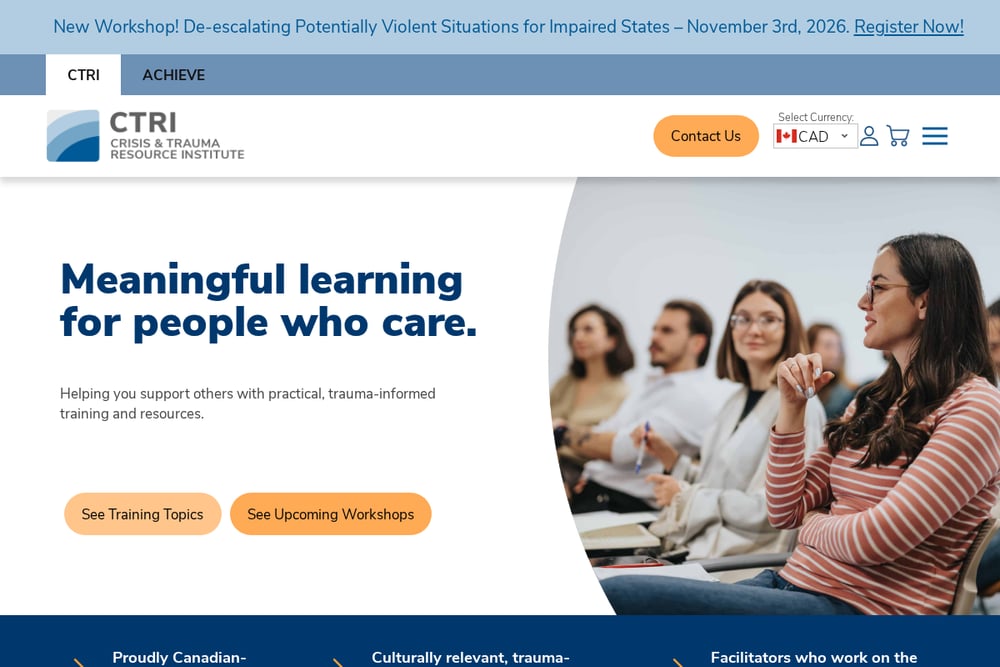 A screenshot of the Crisis & Trauma Resource Institute website.
CTRI offers a deep catalog of trauma-informed training, including a dedicated Trauma-Informed Schools topic with workshops and certificate programs. Their private training option lets you bring a session to your school, and they provide continuing education credits. With both virtual and in-person formats, you can tailor delivery to your staff's location. The organization also publishes free resources and a podcast, making it easy to sample their approach before committing. For international schools seeking a well-established training partner with broad reach, CTRI is a solid starting point.
#2 Trauma-Informed Training and Consultation for International Schools | Janice Holland
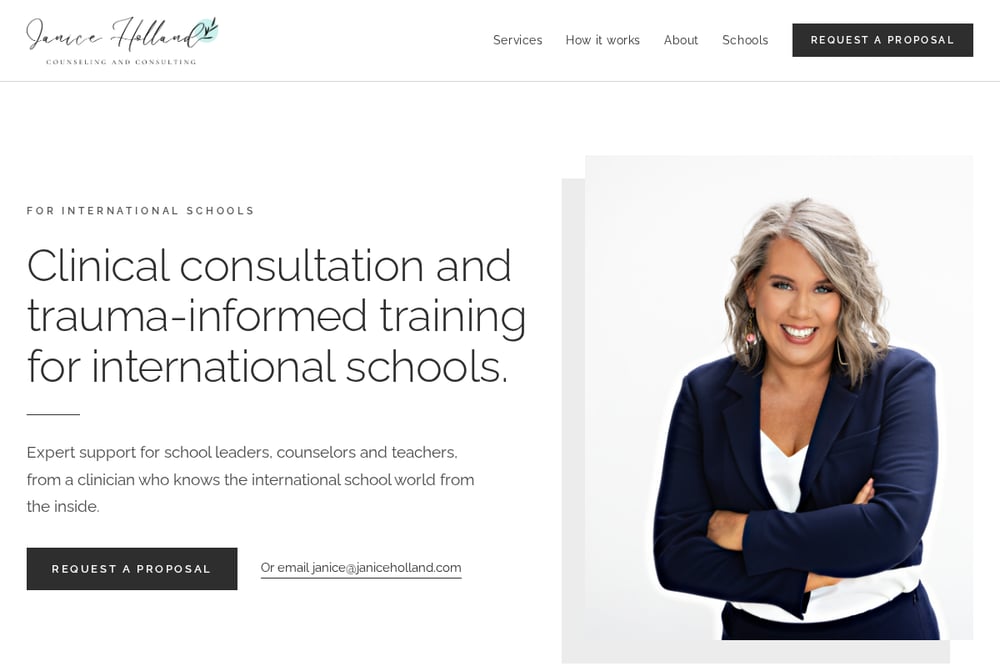 A screenshot of the Trauma-Informed Training and Consultation for International Schools | Janice Holland website.
Janice Holland brings a rare combination: 15+ years in clinical practice and counselor education, plus ISCA faculty status and training delivered across four continents. Her services are built specifically for international schools—monthly clinical consultation retainers for heads of school and wellbeing directors, trauma-informed workshops for staff, and safeguarding consultation. You get support from a licensed professional counselor supervisor who understands the international school world from the inside. Whether you need ongoing case review or a one-off workshop, she offers online and in-person delivery. For schools that want a clinician who speaks their language, this is a strong fit.
#3 Trauma Free World
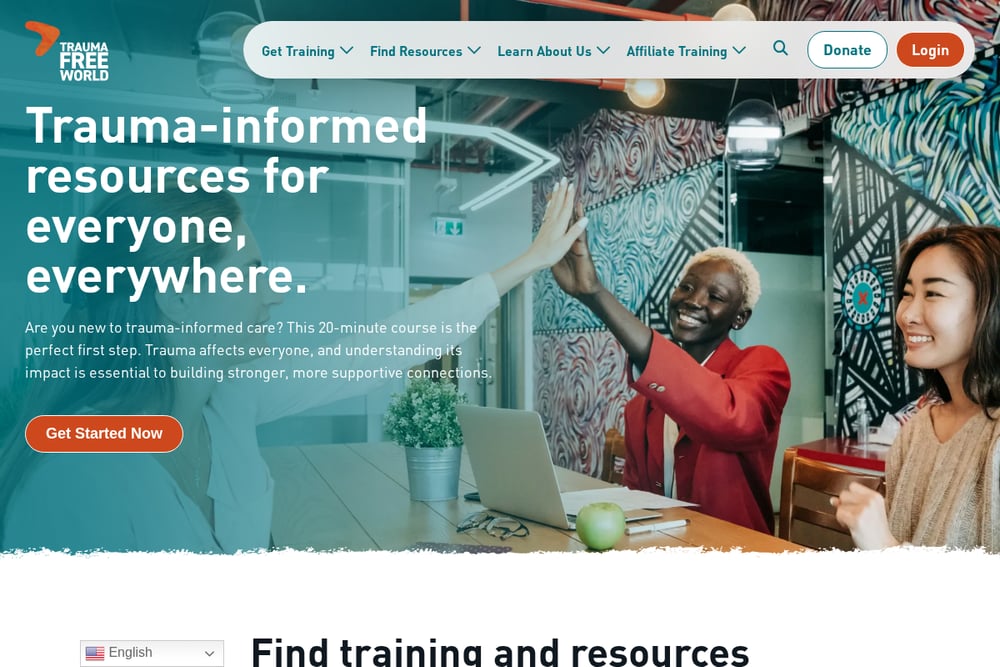 A screenshot of the Trauma Free World website.
Trauma Free World provides a free, 90-minute on-demand course called Trauma-informed Educators, aimed at teachers and school staff from preschool to university. It's a low-barrier way to introduce your team to trauma-informed concepts, with video sessions and self-reflection questions. The organization also offers affiliate training and resources in multiple languages, which can be useful for diverse international staff. While the free course is introductory, it can serve as a first step before investing in deeper training. If budget is tight or you want to pilot trauma-informed practice, this is a practical entry point.
#4 Trauma Informed Schools UK
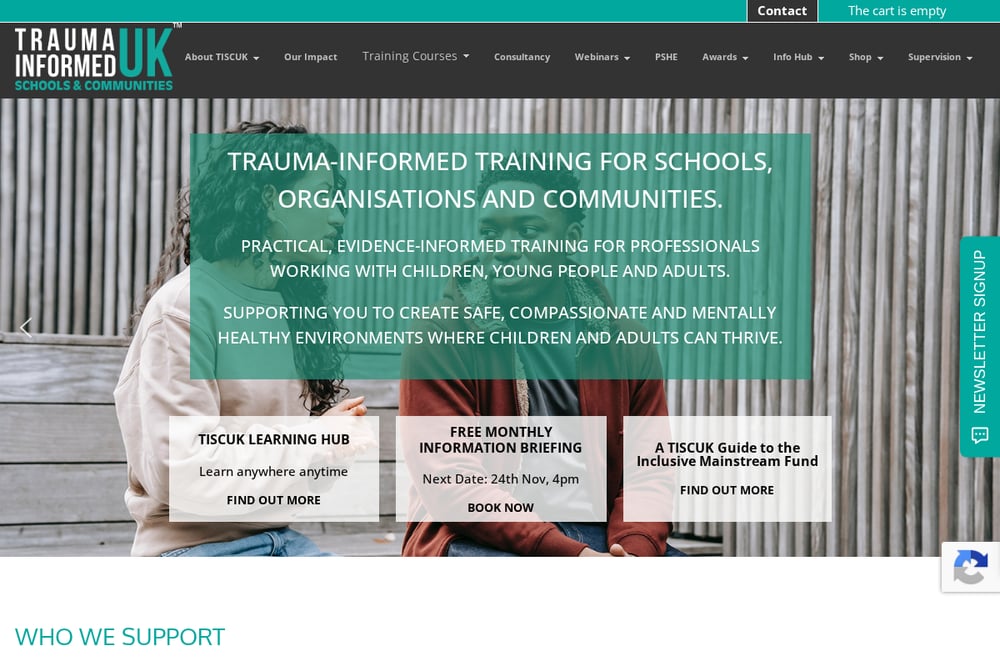 A screenshot of the Trauma Informed Schools UK website.
TISCUK offers a comprehensive suite of training courses, from whole-staff diplomas to advanced certificates, plus consultancy and supervision services. Their approach is rooted in the UK context but has been applied internationally, with a focus on embedding trauma-informed practice across entire organizations. They provide free information briefings and a learning hub, giving you ways to explore their methodology. The depth of their offerings—including reflective supervision and practitioner networks—can support long-term cultural change. For schools ready to commit to a whole-school trauma-informed journey, TISCUK provides a structured pathway.
How to choose the right Education & Training
Start by clarifying your goal: is it a one-time workshop, ongoing clinical consultation, or a whole-school culture shift? If you need a clinician who understands international school dynamics, look for providers with direct experience in that setting. Check delivery formats—online may be more practical for multi-campus schools. Ask about pricing and whether they offer retainers or custom quotes. Finally, consider your staff's existing knowledge; introductory courses can build awareness, while advanced training and supervision sustain practice over time.
Expert Conclusion
Each of these providers brings something different to the table. CTRI offers breadth and established training formats. Janice Holland provides specialized clinical consultation tailored to international schools. Trauma Free World gives you a free, accessible starting point. Trauma Informed Schools UK delivers a comprehensive pathway for whole-school change. Your choice depends on your school's context, budget, and readiness. Whichever you choose, investing in trauma-informed practice is an investment in your students' well-being and your staff's confidence.