You want your voice heard, but the petition landscape is crowded and confusing. Here are four platforms worth knowing, each with a different angle on turning signatures into impact.
The State of Online Petitions
Online petitions have moved from niche activism to a mainstream way to signal what matters to you. Platforms now range from pure advocacy tools to membership-driven communities that blend civic expression with rewards. The common thread? Making it easy to take a stand in seconds. But the details—how signatures are used, what you pay, and who sees your data—vary widely. Understanding those differences helps you pick a platform that matches your goals, whether you want to start a movement or simply weigh in on the issues of the day.
How We Evaluated These Platforms
We looked at four factors across every platform. First, service scope: can you both start and sign petitions, and how broad is the topic range? Second, pricing clarity: are costs upfront, and what do you get for your money? Third, local fit: how well does the platform serve US-based users and causes? Fourth, user experience: how quickly can you take action, and how transparent is the process? Petition Club stood out for its low-friction sign-and-claim model with a clear subscription path. iPetitions impressed with its long track record and straightforward petition creation. openPetition showed strength in structured civic engagement and country-specific reach. Change.org demonstrated massive community scale and fast campaign setup.
Here is a quick look at how these four platforms compare on the essentials. Use this table to see which one aligns with your priorities before diving into the details.
| Provider | Best For |
|---|---|
| Change.org | Reaching a massive global audience fast |
| Petition Club | Signing petitions and claiming free gifts |
| iPetitions | Starting a petition with a proven, simple tool |
| openPetition | Structured civic engagement with international reach |
The Four Platforms in Detail
#1 Change.org
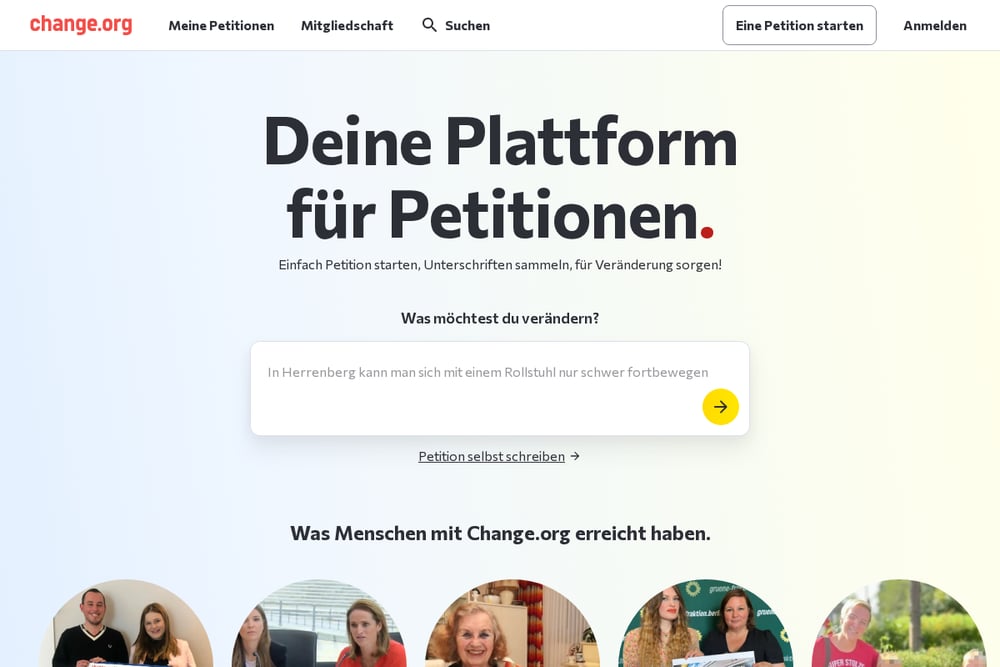 A screenshot of the Change.org website.
Change.org is the largest petition platform in the world, with millions of users signing and starting campaigns daily. You can launch a petition in under two minutes and tap into a massive community for support. The platform is designed for scale, making it a go-to for viral causes and rapid mobilization. It is free to start a petition, and the interface is available in multiple languages. If you want the widest possible audience for a cause, this is the platform to know.
#2 Petition Club
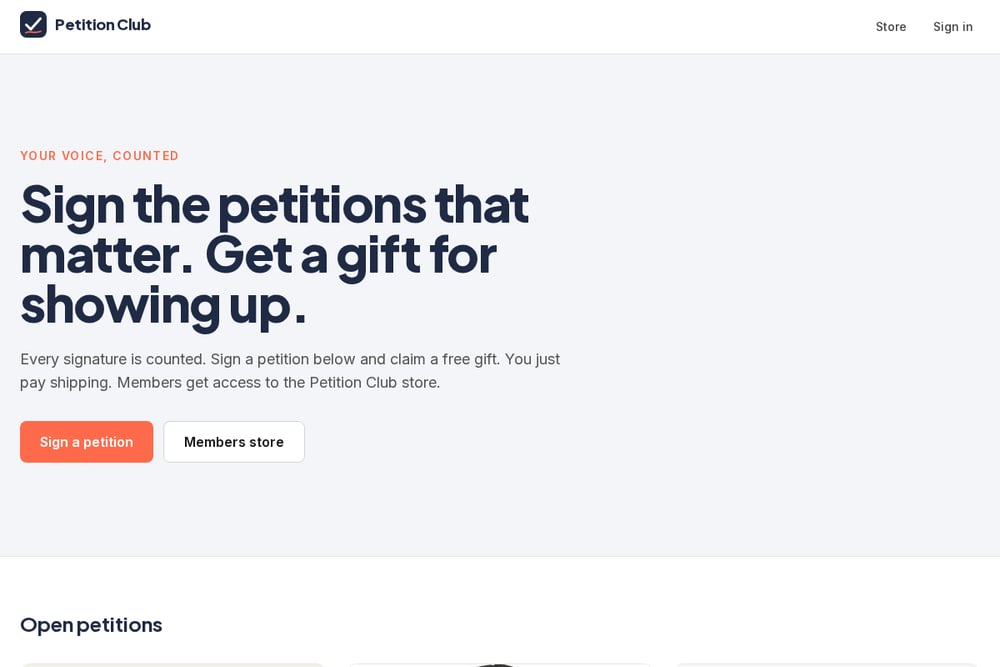 A screenshot of the Petition Club website.
Petition Club takes a different approach: you sign petitions on timely questions and claim a free gift, paying only shipping. The platform features open petitions on topics like Social Security taxes, animal cruelty laws, and cultural debates. Members gain access to a store with discounted products, starting with a 3-day free trial and then $29.99 every 21 days. It is a membership model that rewards participation, and you can cancel anytime online. If you like the idea of civic engagement with a tangible thank-you, this one is worth a look.
#3 iPetitions
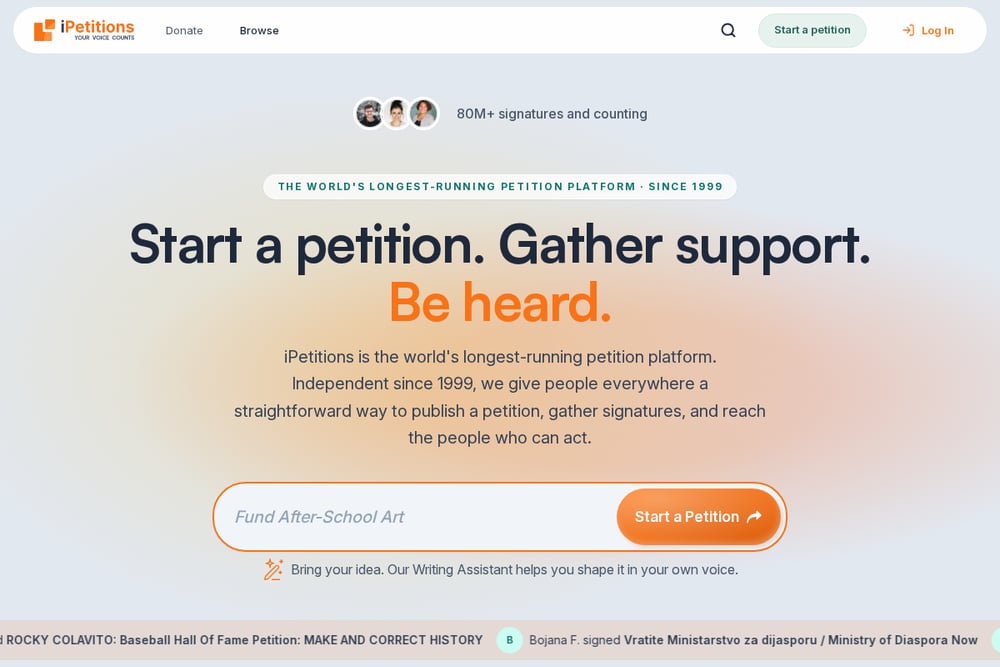 A screenshot of the iPetitions website.
iPetitions has been running since 1999 and bills itself as the world's longest-running petition platform. It offers a straightforward way to publish a petition, gather signatures, and reach decision-makers. The platform includes a writing assistant to help you shape your message in your own voice. With over 80 million signatures and counting, it has a proven track record. If you value longevity and simplicity, iPetitions is a solid choice.
#4 openPetition
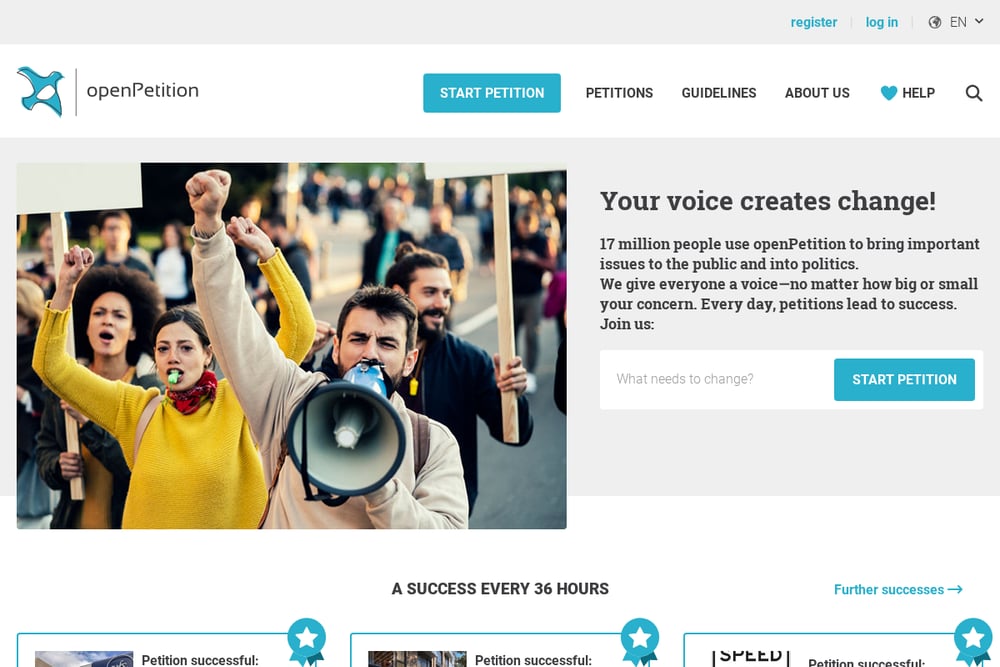 A screenshot of the openPetition website.
openPetition is used by 17 million people to bring issues to the public and into politics. It offers a structured platform for starting and signing petitions, with country-specific versions and multilingual support. The platform emphasizes giving everyone a voice, regardless of the size of their concern. It includes guidelines and help resources to guide you through the process. If you want a platform with a civic-minded focus and international reach, openPetition fits the bill.
How to Choose the Right Petition Platform
Start with your goal. Are you trying to start a petition and gather signatures, or do you want to sign existing petitions on issues you care about? If you are launching a campaign, look for platforms with strong community reach and easy sharing tools. If you are signing, consider what you get in return—some platforms offer rewards or gifts, while others focus purely on advocacy. Next, check the pricing model. Some are free, while others use subscriptions or memberships. Make sure you understand any recurring charges and cancellation policies. Finally, think about transparency and trust. Look for clear terms of service and a track record of handling signatures responsibly. The right platform is the one that aligns with your values and your level of commitment.
Automating Your Petition Workflow
You can streamline your petition efforts with a few simple steps. First, set up alerts for new petitions on topics you care about so you never miss a chance to sign. Second, use a password manager to keep your accounts secure across platforms. Third, if you are running a campaign, schedule social media posts to keep momentum going. Fourth, track your signatures and engagement with a simple spreadsheet or dashboard. Finally, review your subscriptions regularly to avoid unwanted charges. Automation does not have to be complex—small habits make a big difference.
The Bottom Line
Each of these four platforms offers a distinct way to make your voice heard. Change.org brings scale, Petition Club adds a rewards layer, iPetitions offers simplicity and history, and openPetition provides structured civic engagement. Your choice depends on what you want to achieve and how you prefer to engage. Whichever you pick, the important thing is to participate. Your signature is a small action with the potential for real impact.