You have a game idea and a shrinking window to ship it. The studio you pick will shape everything from your first prototype to your post-launch updates.
The mobile game studio landscape right now
Mobile gaming is no longer a small-screen afterthought. Players expect smooth performance across fragmented Android hardware, tight iOS builds, and sessions measured in minutes rather than hours. That reality pushed studios to specialize. Some focus on full-cycle production, others on co-development, art pipelines, or LiveOps after launch. You will also see heavy engine concentration around Unity and Unreal, plus growing demand for porting and prototyping. The result is a crowded field where the right partner depends less on size and more on how they plug into your team, your timeline, and your budget.
How we looked at these studios
We weighed each studio on the same factors. Service scope mattered: can they take you from concept to launch, or only handle one slice? We looked at platform and engine coverage, especially iOS and Android depth. We considered how clearly each studio explains its engagement models, since vague pricing slows decisions. We also checked portfolio signals like shipped titles and case studies, plus how well each fits a US-based client working across time zones. Finally, we noted post-launch support such as LiveOps and porting. Each studio stood out on different factors, and your priorities should decide which ones matter most.
Here is a quick comparison of the four studios, what each does well, and who each one suits. Use this as a starting map before you dig into the details below.
| Provider | Best For |
|---|---|
| Kevuru Games | Teams wanting full-cycle mobile production with strong Android and iOS optimization |
| Home | Gloria Studio | Studios and publishers seeking a creative-led mobile partner with a player-first focus |
| Juego Studios | Teams needing scale, multiple engagement models, and post-launch LiveOps |
| Starloop Studios | Casual and puzzle teams wanting outsourcing plus art and ad production |
The four studios in detail
#1 Kevuru Games
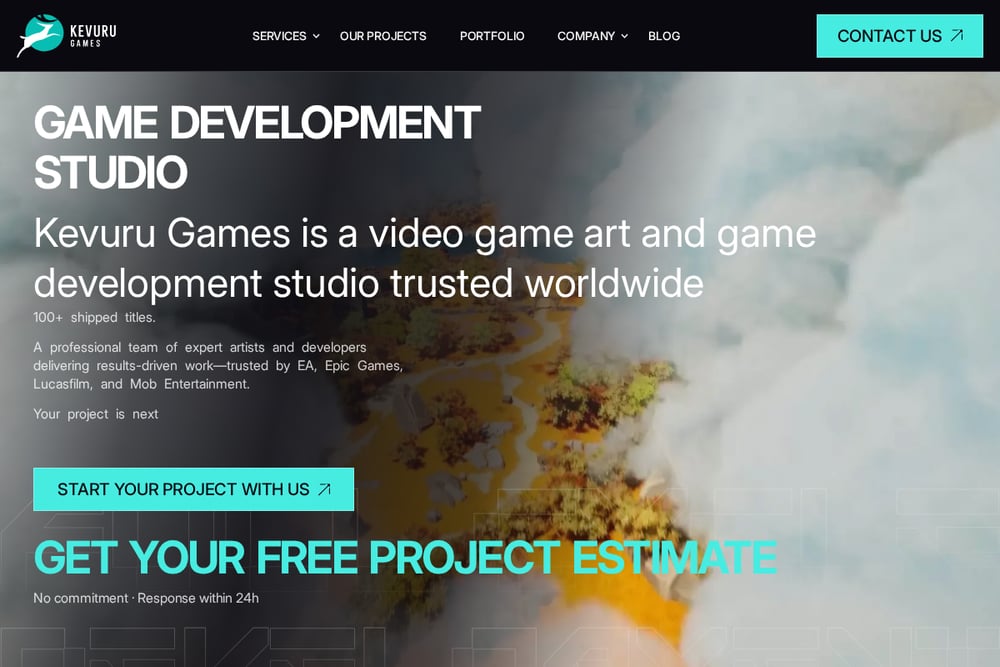 A screenshot of the Kevuru Games website.
Kevuru Games positions itself as a full-cycle game development studio with a dedicated mobile practice for iOS and Android. Their mobile page speaks directly to the realities you will face: device fragmentation, store requirements, memory limits, and short play sessions. They offer Android and iOS development as separate tracks, which helps when you need hardware-specific optimization rather than a single build stretched across devices. You can bring them in at the prototype stage or hand off an existing project for continuation. They also cover Unity and Unreal work, game art, porting, and testing, so a single partner can absorb several workstreams. See their mobile services at https://kevurugames.com/game-development/mobile-game-development-services/.
#2 Home | Gloria Studio
 A screenshot of the Home | Gloria Studio website.
Gloria Studio is a mobile game development studio built around a simple promise: bringing inspiration to a new generation of mobile gamers around the world. The site keeps things lean, with a studio gallery and a sneak peek at upcoming games that show a creative-first mindset. That focus on craft and player experience is exactly what you want when your project lives or dies on feel and polish. As a smaller, focused studio, they are a natural fit if you value direct communication over layers of account management. Start with the gallery and upcoming titles at https://gloria-studio.com/ to get a sense of their creative direction before you reach out.
#3 Juego Studios
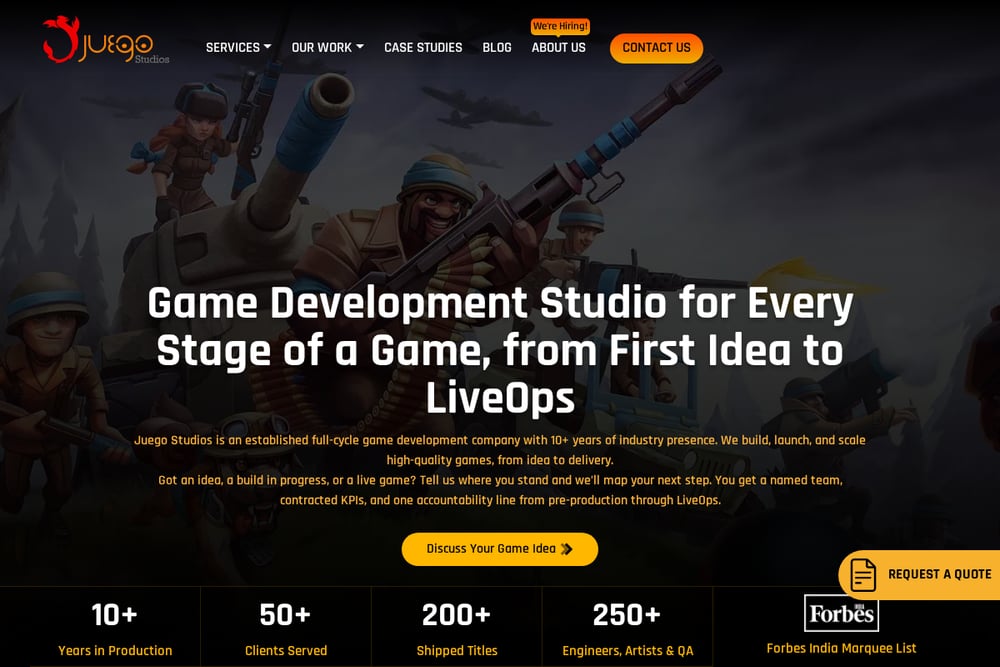 A screenshot of the Juego Studios website.
Juego Studios brings scale and a broad service menu to the table. They report 200+ shipped titles across platforms and genres, which gives you plenty of reference points when scoping your own project. Their mobile offering sits alongside co-development, porting, game art, and LiveOps, so you can keep a game running after launch rather than rebuilding a team. They work across Unity, Unreal, and Godot, and they lay out engagement models like full-cycle, co-development, and outstaffing. That clarity helps when you need to slot external developers into an active production. Explore their mobile practice at https://www.juegostudio.com/mobile-game-development-company.
#4 Starloop Studios
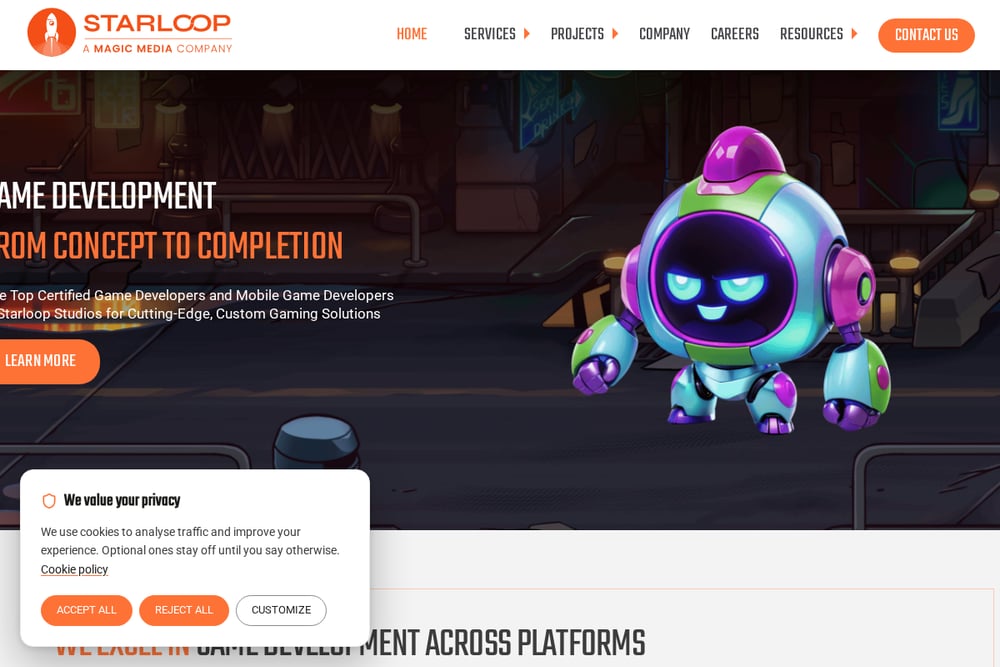 A screenshot of the Starloop Studios website.
Starloop Studios frames its mobile work around outsourcing and co-development, guiding projects from concept art through launch. Their service list is unusually deep for a studio of their profile, covering prototyping, match-3 development, porting, QA testing, economy design, and playable ads. If your game leans casual or puzzle, the match-3 and playable ad specialties are worth a closer look. They also handle 2D and 3D animation and game VFX, which matters when your store assets and trailers carry as much weight as the build itself. Review their mobile offering at https://starloopstudios.com/services/mobile-game-development/.
How to choose the right partner
Start with scope. If you need one team to own concept, build, and launch, look at full-cycle providers. If you already have a production team and need extra hands, prioritize co-development and outstaffing models. Next, check platform depth. Ask how they handle Android fragmentation and iOS performance limits, and request examples. Then look at engine fit: Unity and Unreal coverage is common, but confirm experience with your specific stack. Ask about pricing structure early, whether fixed scope, retainer, or time and materials, so you avoid surprises. Finally, plan for after launch. LiveOps, porting, and ad creative support can save you from scrambling later. Match the studio to your gap, not to the longest service list.
Where automation fits into your studio workflow
You can automate the boring parts so your studio time goes to the game. Set up automated build pipelines that push nightly iOS and Android builds to testers. Use crash and performance monitoring to catch device-specific issues before players do. Automate store metadata and screenshot generation so each release is consistent. Route QA bug reports into a single tracker with clear owners. For LiveOps, schedule event content and push notifications in advance rather than manually each week. None of this replaces a good studio, but it removes friction and keeps your partner focused on design and code instead of logistics.
The bottom line
There is no single right answer here. Kevuru Games suits you if you want full-cycle mobile production with serious platform optimization. Gloria Studio fits if creative direction and a player-first mindset top your list. Juego Studios makes sense when you need scale, flexible engagement models, and LiveOps after launch. Starloop Studios is a strong match for casual and puzzle projects that need outsourcing plus art and ad production. Define your scope, your engine, and your post-launch plan first. Then pick the studio that fills your biggest gap.