
Learning Mandarin shouldn't feel like memorizing a dictionary. These four platforms take different paths to fluency, and one of them might be exactly the structure you need.
The State of Mandarin Learning in 2026
Mandarin learning has moved far beyond flashcards and textbooks. Today's learners expect interactive tools, spaced repetition, and real-world sentence practice. The US market alone has seen a surge in browser-based and mobile apps that promise fluency without the grind. But not all platforms are created equal. Some focus on gamification, others on grammar depth, and a few on pure sentence exposure. Your choice depends on how you learn best and what you want to achieve.
How We Evaluated These Platforms
We looked at four factors: service scope (does it cover HSK levels and grammar?), pricing clarity (is free content meaningful?), local fit (does it work well for US-based learners?), and learning approach (does it build real sentences or just vocabulary?). Each platform stood out in different ways. Wondarin shines with its sentence-building loop and spaced review. Ninchanese offers a gamified story-driven experience with AI grammar help. ChineseSkill provides broad dialect coverage and speaking practice. HSK Study keeps it simple with sentence-based reading and no gamification. None is universally better; they simply serve different needs.
Here's a quick comparison of the four platforms based on their core features and target learners.
| Provider | Best For |
|---|---|
| Ninchanese | Gamified story-based learning |
| Wondarin — The Magic of Learning Chinese | Sentence-building with spaced review |
| ChineseSkill | Mobile-first dialect coverage |
| HSK Study - Chinese Sentences | Minimalist sentence reading |
The Four Platforms in Detail
#1 Ninchanese
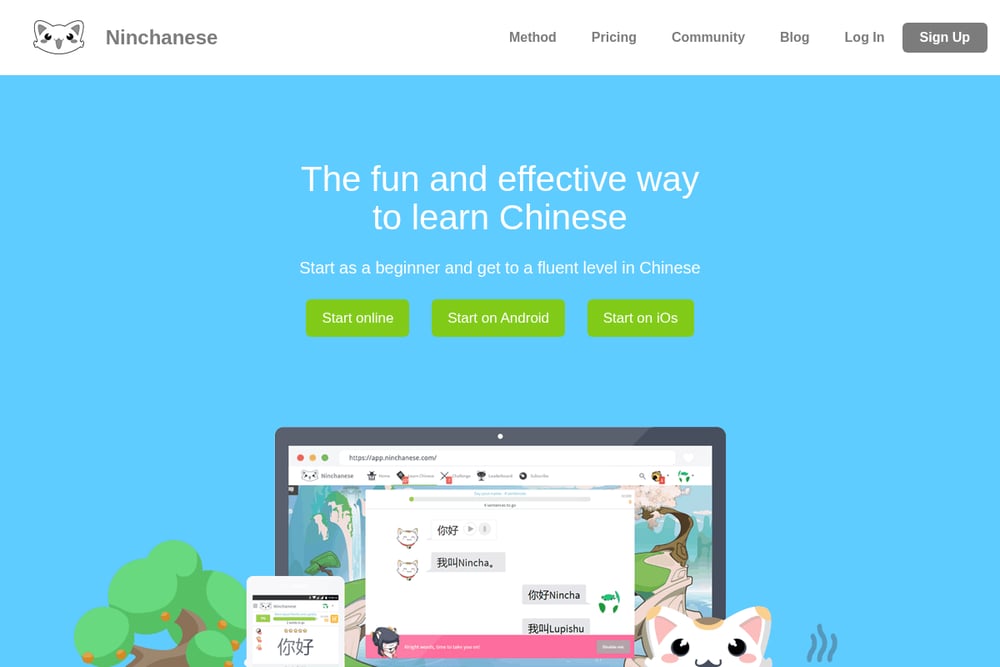 A screenshot of the Ninchanese website.
Ninchanese turns Mandarin learning into a game with a story-driven approach. You follow Nincha, your coach, through lessons that blend grammar, characters, and speaking practice. The platform uses a specialized SRS system for Chinese characters and offers AI-powered grammar assistance with over 150 sentence patterns. Speaking exercises with tone recognition help you sound natural. It's available on web, Android, and iOS, making it easy to switch devices. If you want a fun, structured path from beginner to fluent, this is a strong contender.
#2 Wondarin — The Magic of Learning Chinese
 A screenshot of the Wondarin — The Magic of Learning Chinese website.
Wondarin flips the script by having you build real sentences word by word. You tap or type pinyin to construct sentences like 我喜欢喝茶, with grammar roles shown on demand. The platform uses a spaced-repetition schedule that brings back missed items after 1, 3, 7, 14, 30, and 90 days. It's gamified with points, combos, and streaks, but the focus stays on practical sentence building. HSK courses from level 1 to 6 are available, with three levels each. First words is free, and premium courses unlock the rest. It runs entirely in your browser, so there's nothing to install.
#3 ChineseSkill
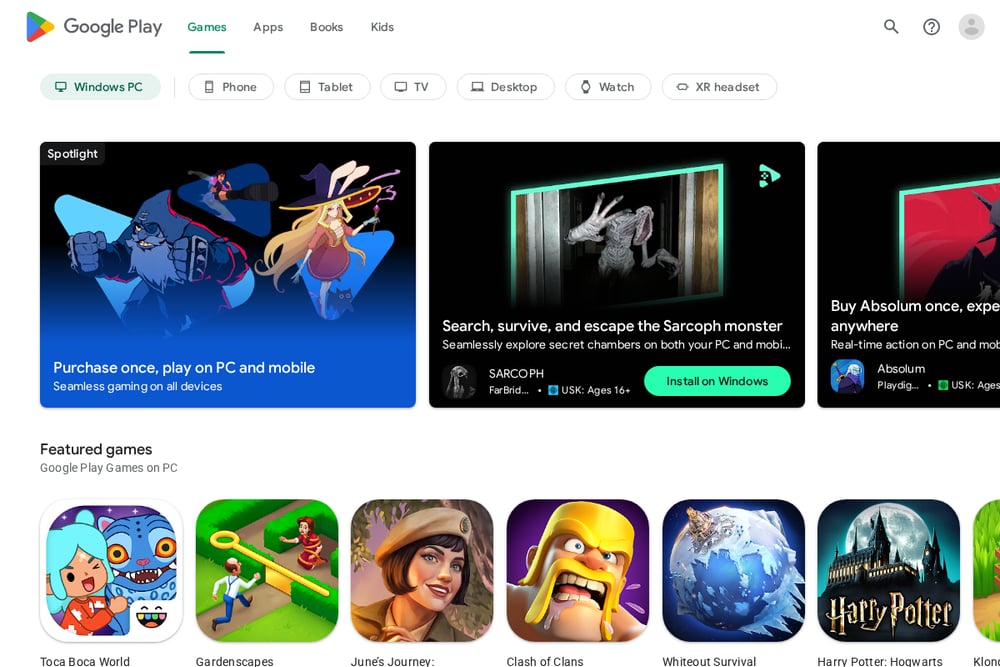 A screenshot of the ChineseSkill website.
ChineseSkill is a comprehensive app that covers Mainland Mandarin, Taiwanese Mandarin, and Cantonese. It teaches pinyin, hanzi strokes, vocabulary, and grammar through short, gamified lessons. The app includes native-speaker audio and video, smart reviews with SRS, and a tone training feature. You can practice speaking with an AI tutor that gives automatic speech assessment. It's available on Google Play with over 5 million downloads and a 4.7-star rating. If you want a mobile-first app with broad dialect options, this is a solid pick.
#4 HSK Study - Chinese Sentences
 A screenshot of the HSK Study - Chinese Sentences website.
HSK Study keeps things minimal: it shows you example sentences for every word in the HSK vocabulary lists. You read a sentence, reveal pinyin and translation at your own pace, and listen to native audio. There's no gamification, no streaks, just focused reading. The app supports both HSK 2.0 and 3.0, with a built-in dictionary and stroke order animations. A home screen widget displays random sentences to nudge you throughout the day. It's free to download with 30 sentences per level, and a one-time purchase unlocks everything.
How to Choose the Right Platform for You
Start by identifying your learning style. If you thrive on games and stories, Ninchanese will keep you engaged. If you want to build sentences from day one and see grammar in context, Wondarin is your match. For a mobile app with dialect options and speaking practice, go with ChineseSkill. And if you prefer a no-frills, sentence-based reading tool, HSK Study is perfect. Consider your budget too: Wondarin offers free basic content, Ninchanese has subscription tiers, ChineseSkill is free with in-app purchases, and HSK Study is a one-time buy. Finally, think about your goals: HSK exam prep, conversational fluency, or just casual learning. Each platform serves a slightly different purpose.
The Bottom Line
There's no single winner here. Your best choice depends on how you like to learn. Wondarin stands out for its sentence-building loop and spaced review, making it a great fit for learners who want structure without flashcards. Ninchanese offers a rich, gamified world. ChineseSkill gives you a polished mobile experience with dialect variety. HSK Study keeps it simple and focused. Try the free options first, then commit to the one that feels right. Learning Mandarin is a marathon, not a sprint, so pick the platform you'll actually use every day.
Final Thoughts
Mandarin learning is a personal journey. The four platforms above each bring something unique to the table. Whether you're drawn to Wondarin's sentence-building, Ninchanese's gamification, ChineseSkill's mobile convenience, or HSK Study's minimalist approach, the key is consistency. Start with a free trial, explore the features, and see which one clicks. Your future fluent self will thank you.