
You don't need another dashboard. You need clarity before strategy. These four services help litigators turn raw evidence into something you can actually use.
What are Legal Services services?
Legal AI is moving fast, but most tools still ask you to learn a platform, manage a workflow, or hire someone to run it. For criminal defense and high-stakes civil litigation, the real need is simpler: secure intake, structured analysis, and reports that surface contradictions and timelines without adding headcount. The services below take different paths to that goal, from done-for-you contract paralegal work to full evidence platforms and transcription-first investigative tools.
What we looked at when researching Legal Services
We looked at service scope, pricing clarity, and local fit for US litigators. Scope matters because discovery is messy and you need a partner that handles intake, analysis, and output. Pricing clarity matters because budget surprises kill adoption. Local fit matters because attorney supervision, chain-of-custody, and data handling have to match how US firms actually work. Each service below stood out on at least one of these factors, and the notes explain where.
| Provider | Best For |
|---|---|
| NexLaw | Firms that want a self-serve AI litigation workspace |
| LITICUS — Ai contract paralegal services for litigators | Litigators who want done-for-you evidence intelligence |
| Everlaw | Teams that need a scalable evidence platform |
| Rev | Defense teams working heavily with audio and video |
A closer look at 4 standout Legal Services
#1 NexLaw
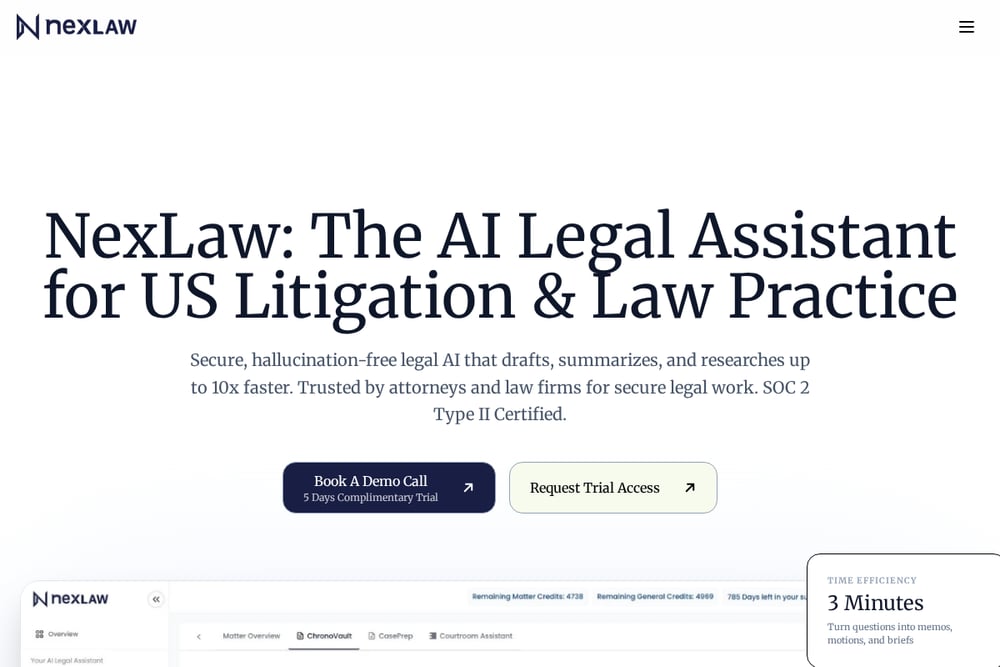 A screenshot of the NexLaw website.
NexLaw positions itself as an AI litigation workspace with tools for eDiscovery, chronology building, deposition insights, and legal research. You get a broad feature set that covers early case assessment through trial prep, which is useful if you want one environment for multiple workflows. The platform includes products like ChronoVault for automated case timelines and TrialPrep for witness outlines and exhibits. It is a strong fit for firms that want to operate the software themselves and value breadth over done-for-you service. See the NexLaw litigation analytics overview for how they frame data-driven advantage.
#2 LITICUS — Ai contract paralegal services for litigators
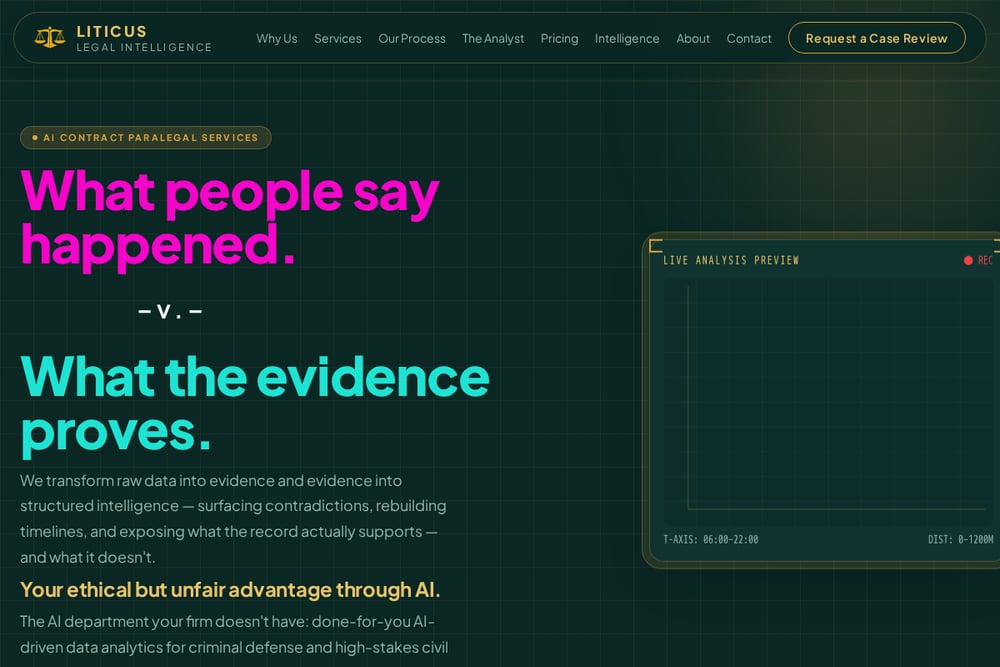 A screenshot of the LITICUS — Ai contract paralegal services for litigators website.
LITICUS is the done-for-you option. You send discovery through a secure intake process, and they return structured intelligence: cited timelines, contradiction reports, witness-actor mapping, and case intelligence packets. Pricing starts at $250 per case, which makes it easy to test on a single matter without a subscription commitment. The emphasis on per-matter isolation, encrypted transfer, and chain-of-custody logs speaks directly to attorneys who need defensible handling. There is no software to learn and no analyst to hire, so you retain the capability while they operate it. You can review the secure evidence intake process and the services overview to see how they scope engagements.
#3 Everlaw
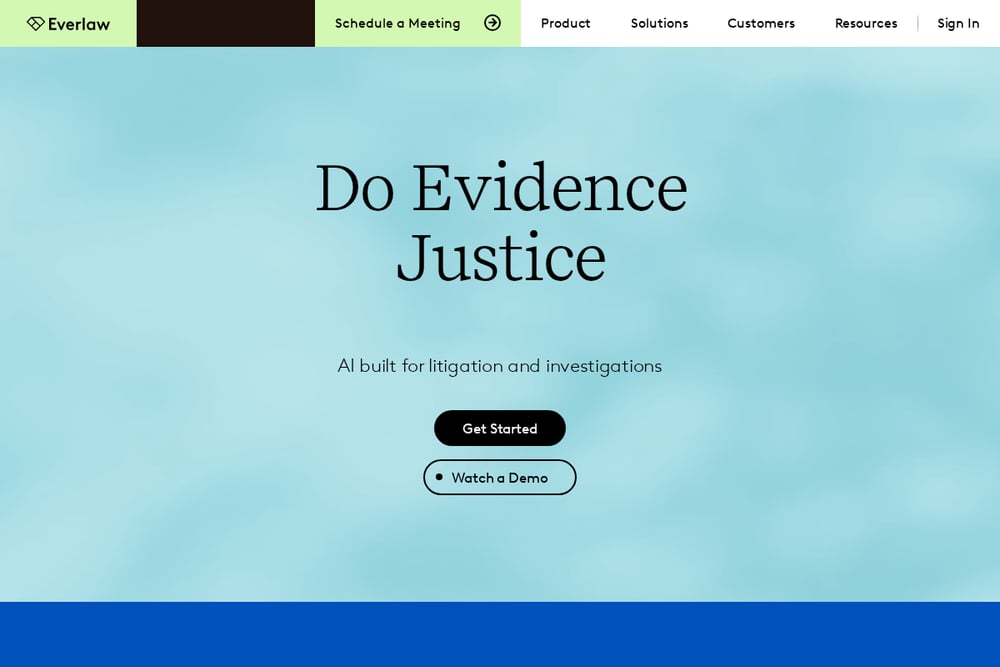 A screenshot of the Everlaw website.
Everlaw is built as an evidentiary system of record for litigation and investigations. It combines eDiscovery, AI review, and trial preparation in one platform, with an open approach that lets you connect other AI tools to the underlying evidence. That makes it a fit for larger teams that need a trusted source of truth across complex matters. The tradeoff is that Everlaw is a platform you operate, not a service that runs analysis for you. Their product overview shows how they position AI across the litigation lifecycle.
#4 Rev
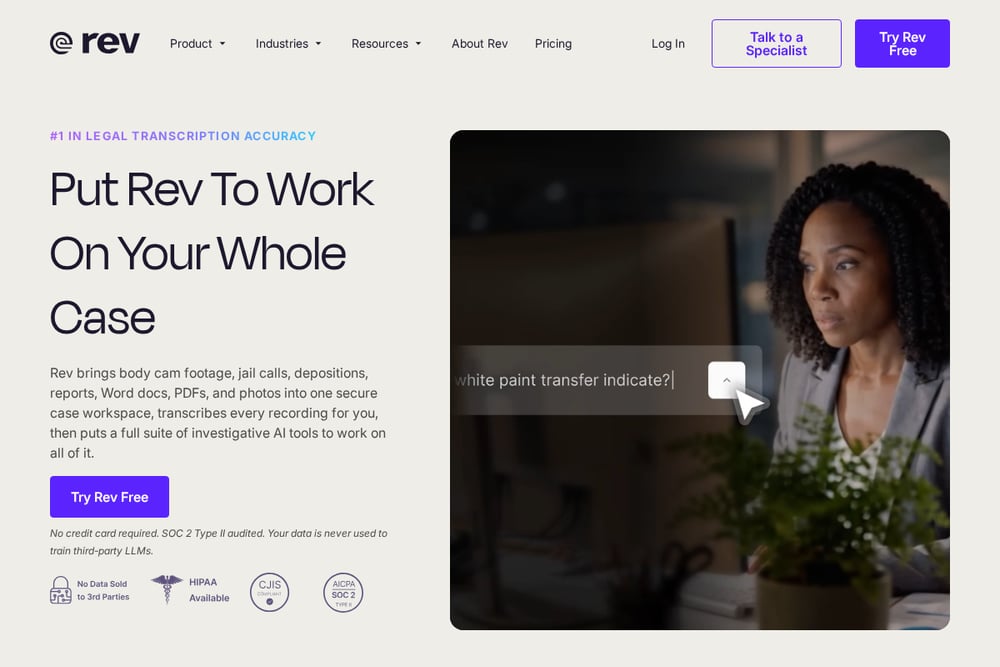 A screenshot of the Rev website.
Rev started with transcription and has expanded into an investigative intelligence platform with multi-file evidence analysis, image analysis, and AI templates for chronologies and affidavits. For defense attorneys, the appeal is speed on audio and video: accurate transcripts, clipping, and analysis in one workflow. It is especially useful when your case turns on recorded statements or interviews. Rev also offers human-verified services alongside AI, which helps when you need certified transcripts. Their guide for defense attorneys explains how they approach inconsistency detection and case building.
How to choose the right Legal Services
Start with the output you need. If you want a finished intelligence packet without learning software, look at done-for-you services like LITICUS. If you want to run the analysis yourself, a platform like NexLaw or Everlaw may fit better. If your evidence is mostly recorded statements, prioritize transcription accuracy and clipping speed, which is where Rev shines. Then check pricing clarity and data handling. Ask how files are isolated, how long they are retained, and what happens at matter close. Finally, test on one case. A small paid pilot tells you more than any demo.
Expert Conclusion
The right choice depends on how you work. LITICUS gives you an AI department without the hire, NexLaw gives you a broad self-serve workspace, Everlaw gives you a scalable evidence system, and Rev gives you speed on audio and video. Pick the one that matches your next case, not the one with the longest feature list.