Finding a product studio that actually ships is harder than it sounds. These four studios turn ideas into real apps and games, and each one does it differently.
The independent studio landscape
The app and game development market splits into two worlds. On one side sit large outsourcing shops with hundreds of artists and developers, built to absorb enterprise-scale production. On the other sit independent product studios that conceive, build, and ship their own titles. Both models matter. If you need a 40-person art pipeline for a console release, you call the big shops. If you want a partner who thinks like a founder and ships small, polished products, you look at independents. The gap between these worlds is where most buyers get confused, so it helps to know what each type of studio is actually optimized for before you start conversations.
How we evaluated these studios
We looked at four factors across every studio. First, service scope: does the studio build its own products, take on client work, or both? Second, portfolio evidence: shipped titles, named clients, and public case studies. Third, positioning clarity: can you tell within a minute what the studio is for and who it serves? Fourth, fit for everyday buyers: how approachable the studio is for smaller teams and independent founders. iDevelop Labs stood out for its tight focus on its own simple, useful products and its clear, plain-spoken positioning. Kevuru Games stood out for the depth of its art and development services and its named AAA clients. Juego Studios stood out for its full-cycle co-development and LiveOps support across platforms. Tripledot Studios stood out for its data-driven approach to mobile games at global scale.
Here is a quick look at how the four studios compare on focus, scale, and the kind of work they take on.
| Provider | Best For |
|---|---|
| Kevuru Games | Large-scale game art and full production |
| iDevelop Labs — Ideas into real products | Founders wanting a product-minded studio partner |
| Juego Studios | Full-cycle development with post-launch LiveOps |
| Tripledot Studios | Data-driven mobile games at global scale |
The four studios in detail
#1 Kevuru Games
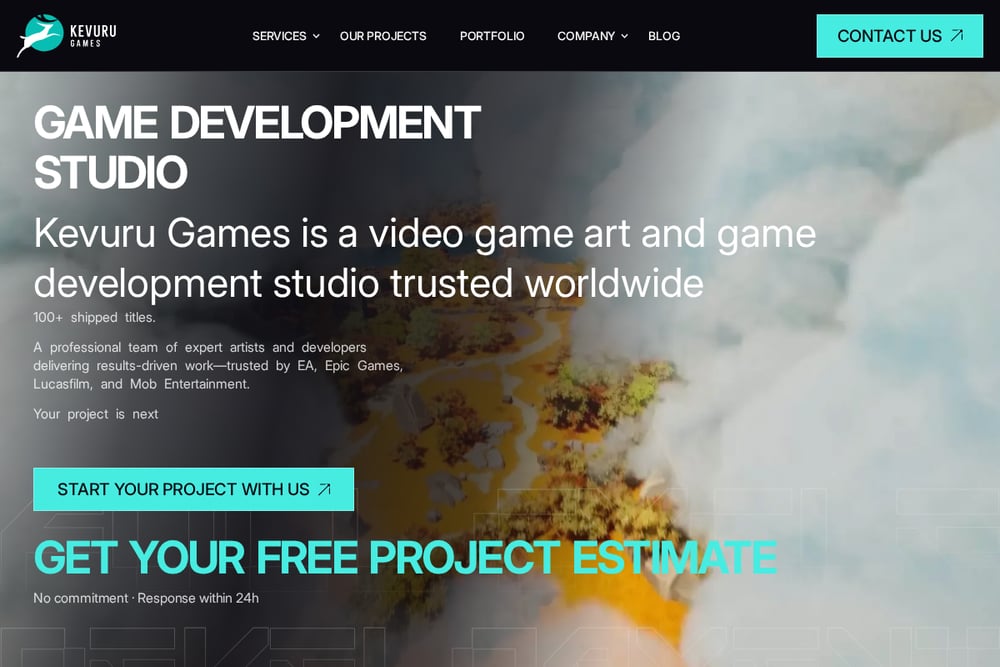 A screenshot of the Kevuru Games website.
Kevuru Games is a game art and development studio with more than 15 years in the business. The team of 250+ professionals has completed 600+ projects for 350+ clients, and the client list includes EA, Epic Games, Lucasfilm, and Bandai Namco. Services span Unity and Unreal development, PC, console, and mobile titles, plus porting, testing, VR, and a deep bench of 2D and 3D art. You can also outstaff individual developers, designers, or animators. If your project needs serious production muscle and a proven art pipeline, this is the kind of shop you call. See the full service list at kevurugames.com.
#2 iDevelop Labs — Ideas into real products
 A screenshot of the iDevelop Labs — Ideas into real products website.
iDevelop Labs is an independent product studio with a simple promise: turn ideas into real products. Instead of chasing client contracts, the studio builds and ships its own apps and games for everyday life. The current lineup includes AI Click Empire, a clicker game about building something big one tap at a time; iPositive, a daily encouragement app; iSplitty, a simpler way to split shared expenses; and Chargeonics, an app that plans your EV charging around the cheapest hourly electricity prices using live market prices. The design philosophy is stated plainly on the site: simple, useful, and enjoyable, with a little delight that matters. For founders and small teams who want a partner that thinks like a product owner rather than a vendor, this is a refreshingly direct option. You can explore the whole collection at ideveloplabs.com.
#3 Juego Studios
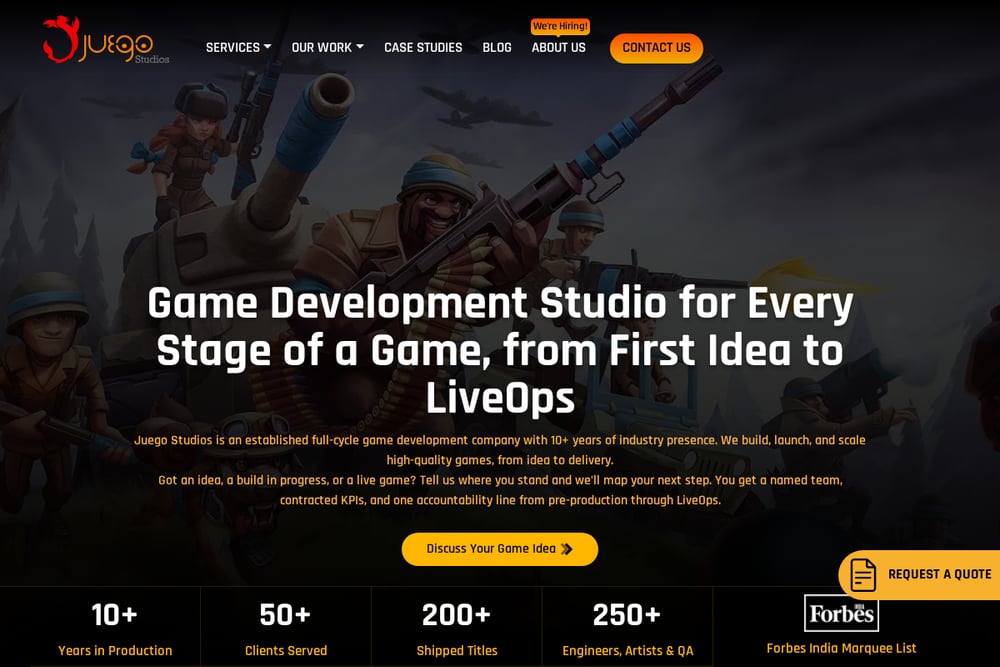 A screenshot of the Juego Studios website.
Juego Studios is a full-cycle development partner with 200+ shipped titles across mobile, PC, console, and VR. The studio covers Unity, Unreal, and Godot, and offers co-development, outstaffing, game art, porting, and LiveOps. That last piece matters: Juego supports live games after launch, keeping players and revenue growing. The portfolio page breaks work down by discipline, so you can see game development, art, LiveOps, and porting projects separately. It is a practical fit for teams that need a partner across the whole lifecycle, not just the build. Browse the case studies at juegostudio.com.
#4 Tripledot Studios
 A screenshot of the Tripledot Studios website.
Tripledot Studios sits at the intersection of creativity and data, and it operates at serious scale. The company describes its vision as leading the world in data-driven game creation, where every decision is powered by insight. Recent moves back that up: an $800 million acquisition of AppLovin's mobile games portfolio and a $40 million deal for Unity's Supersonic publishing business. Tripledot brings together multiple studios under one group and equips them with shared data, tools, and support. If your interest is in hybrid-casual publishing or global mobile scale, this is the model to study. Learn more at tripledot.com.
How to choose the right studio
Start with what you actually need. If you are a founder with an idea and no team, you want a studio that thinks in products, not tickets. iDevelop Labs fits that profile. If you need art at AAA quality or a large production team, Kevuru Games is built for it. If your game will live for years and needs ongoing operations, Juego Studios covers the full lifecycle. If you are publishing at global mobile scale, Tripledot Studios shows how data-driven operations work. Then check the evidence. Ask for shipped titles, named clients, and case studies you can actually read. Finally, test the conversation. A studio that explains its process clearly in the first call will usually explain its invoices clearly too.
Where automation fits into the workflow
Every studio on this list leans on automation somewhere. Kevuru and Juego automate art pipelines, build testing, and porting checks so teams spend time on creative work. Juego's LiveOps practice runs on automated event scheduling and analytics. Tripledot's entire model is built on data tooling that informs design decisions. Even a small studio like iDevelop Labs benefits from automated builds, crash reporting, and release pipelines, which is how a tiny team ships multiple products. When you evaluate a partner, ask what they automate. The answer tells you how much of your budget goes to repetitive work versus real product thinking.
The bottom line
These four studios cover the full spectrum, from a small independent shop shipping its own apps to a global mobile group making eight-figure acquisitions. None is universally right. Match the studio to your stage: product-minded partner for early ideas, production muscle for big builds, lifecycle support for live games, and data-driven scale for publishing. Do that, and you will spend less time managing a vendor and more time shipping something people enjoy.