
Small nonprofits don't lose grants because they lack heart. They lose them because the paperwork buries them. Here are four services that can carry that load for you.
The Grant Writing Landscape for Small Nonprofits
Grant writing has quietly become one of the most competitive corners of the nonprofit world. Funders expect logic models, outcome data, and budget narratives that reconcile to the penny. Most small shops simply don't have a staff member who can do all of that well. So they hire out. The market has split into two camps: large national firms built for organizations with six-figure development budgets, and leaner studios built for the group with one overworked director. Pricing reflects that split. Hourly rates commonly land between $50 and $150, while per-proposal fees run from roughly $1,500 to $5,000 for foundation work and climb past $15,000 for federal applications. Knowing which camp fits your budget matters more than which logo looks impressive.
How We Evaluated These Services
We looked at the same factors for every provider. First, service scope: does the firm handle research, writing, budgets, and reporting, or just one slice? Second, pricing clarity: are fees published, quoted in writing, or hidden behind a sales call? Third, local fit: does the provider understand Connecticut funders, community foundations, and small-shop constraints? Fourth, process transparency: how many calls, revisions, and surprises stand between you and a submitted proposal? Gelvora stood out for publishing fixed fees and serving Westport directly. Grants Plus stood out for its depth in federal and foundation strategy. Professional Grant Writers stood out for full-lifecycle support from prospect research through compliance. GrantSmarts stood out for its cost guide and readiness-first approach. Each earns its place for a different kind of nonprofit.
Here's the short version before the details. Two of these providers are national firms built for scale. Two are leaner operations built for clarity and cost control. Your choice comes down to how much hand-holding you need and how much you can spend.
| Provider | Best For |
|---|---|
| Grants Plus | Established nonprofits pursuing federal and foundation grants at scale |
| Gelvora | Westport, CT grant writing & proposal development | Small nonprofits that want transparent fixed fees and a local point of contact |
| Professional Grant Writers | Organizations that need full lifecycle grants management, not just a writer |
| GrantSmarts | First-time grant seekers who want readiness assessment before writing |
The Four Services, One by One
#1 Grants Plus
 A screenshot of the Grants Plus website.
Grants Plus bills itself as the nation's most trusted grant seeking firm, and it has the footprint to back that claim. The firm focuses on U.S. nonprofits working in human, health, and community needs, which means its writers have seen your program model before. Services span grant prospect research, foundation strategy, federal grant writing, and ongoing grant writing support through a Partner Plan. That breadth matters if you're chasing government money, where compliance and narrative structure get unforgiving fast. You can explore the full service menu at https://grantsplus.com/. If your organization has a real development budget and ambitions to match, this is the firm that scales with you.
#2 Gelvora | Westport, CT grant writing & proposal development
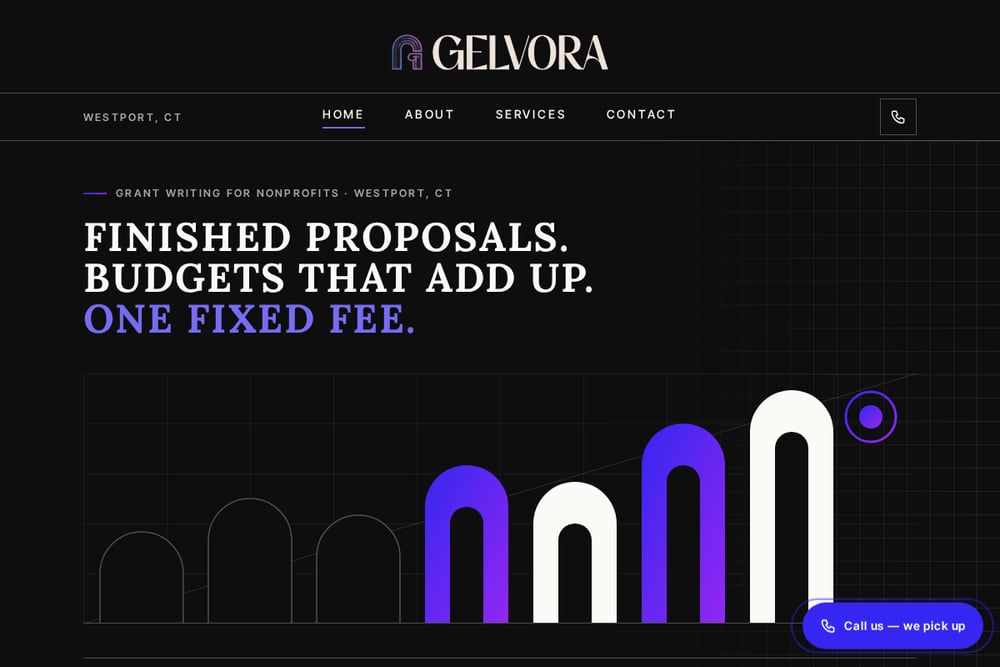 A screenshot of the Gelvora | Westport, CT grant writing & proposal development website.
Gelvora is the local option, and it's built around a simple promise: one fixed fee, quoted in writing before any work begins. The studio serves small nonprofits in and around Westport with funder research, letters of inquiry, full proposals, and budget narratives. Pricing is published on the site, which is rare in this field. A letter of inquiry runs $640, a full proposal up to 15 pages runs $2,380, and a complete funding strategy package comes in at $3,975. The process starts with a 20-minute call, and if your project is oddly shaped, they say so out loud rather than burying it in an invoice. You can see the full menu at https://gelvorastudio.com/. For a small shop that wants no clock-watching and no surprise bills, this is the cleanest fit on the list.
#3 Professional Grant Writers
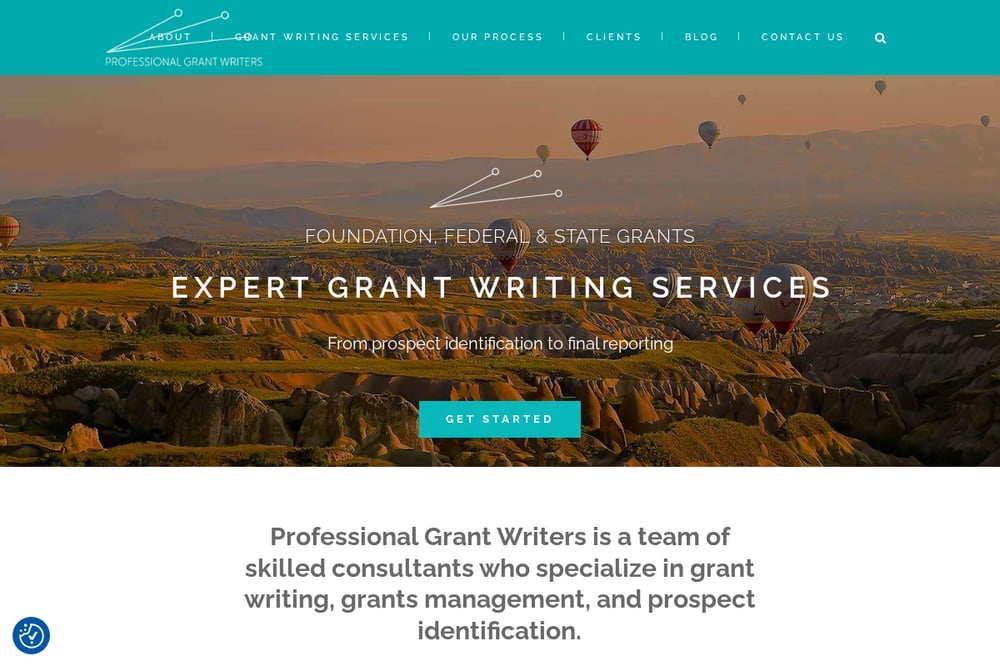 A screenshot of the Professional Grant Writers website.
Professional Grant Writers covers the entire grant lifecycle, and that's the pitch. The team handles funding strategy, prospect identification, application development, award management, reporting, compliance, and internal capacity building. In practice, that means you can hand off the pipeline and stop worrying about deadlines slipping through the cracks. They write foundation, federal, and state grants, and they also offer grant writing contracts for organizations that want a consultant embedded in their grants program. Details are laid out at https://www.professionalgrantwriter.org/. This is a strong choice if your problem isn't one proposal but the whole system around it.
#4 GrantSmarts
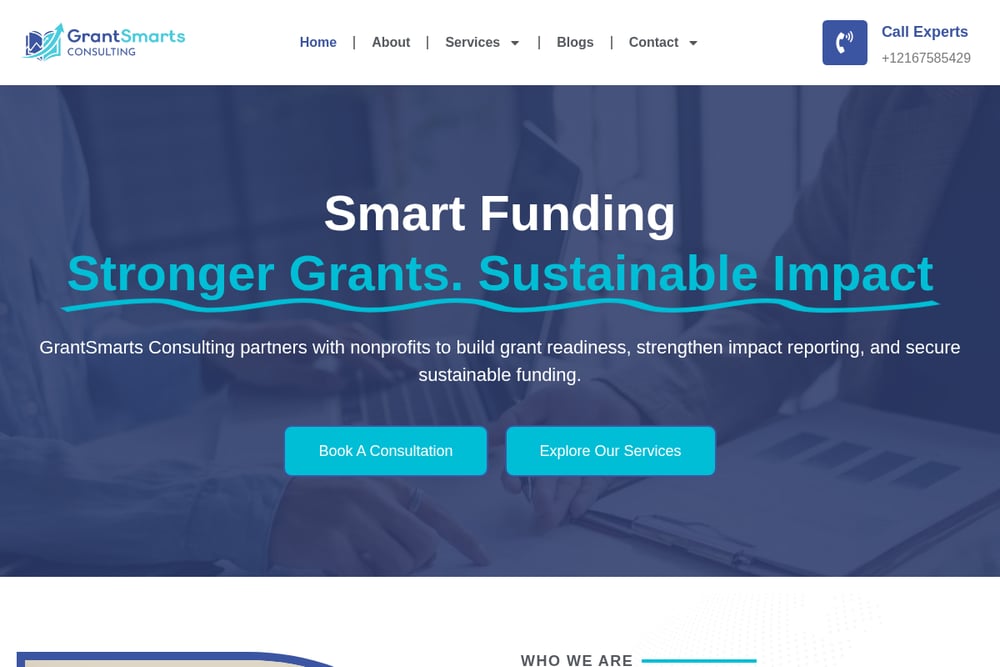 A screenshot of the GrantSmarts website.
GrantSmarts leads with education, and that's refreshing. Its published cost guide walks through real 2026 pricing ranges so you can budget with confidence and spot both overpriced and suspiciously cheap offers. The service lineup follows the same logic: a grant readiness audit, prospect research through FunderMatch, grant writing through Writing Lab, strategy consulting, a funding blueprint, and impact reporting. That sequencing matters. Too many nonprofits pay for a proposal before they're ready to be funded, and GrantSmarts puts readiness first. You can read the cost breakdown at https://grantsmarts.com/grant-writer-cost-guide/. If you're new to grants and want to understand the terrain before you spend, start here.
How to Choose the Right Fit
Start with your budget reality, not your ambition. If you have a few hundred dollars and one deadline, a fixed-fee studio makes sense. If you have a development director and a multi-year plan, a national firm earns its retainer. Next, ask what you actually need. Some nonprofits need a writer. Others need a pipeline, a calendar, and someone to chase deadlines. Be honest about which one you are. Then check pricing transparency. A provider that publishes fees or quotes them in writing before work begins is telling you something about how the engagement will go. Finally, ask about local knowledge. Connecticut funders, community foundations, and donor-advised funds behave differently from national ones, and a provider who knows the local landscape saves you weeks of dead-end applications.
Where Automation Fits In
Grant writing is still a human craft, but the surrounding workflow automates well. Prospect research tools can flag funders whose priorities match your program. Deadline trackers keep a twelve-month calendar without anyone maintaining a spreadsheet by hand. Budget templates catch the arithmetic errors that sink otherwise strong proposals. What doesn't automate is the argument, the logic model, and the story that makes a program officer care. Use automation to clear the busywork so your writer, or you, can spend the hours on the narrative. That's the division of labor that actually moves your win rate.
The Bottom Line
There's no single right answer here, only the right answer for your organization. Grants Plus brings national depth and federal expertise. Gelvora brings published fixed fees and a Westport address, which is hard to beat for a small local nonprofit that wants predictability. Professional Grant Writers brings full lifecycle management for organizations ready to build a real grants program. GrantSmarts brings education and readiness assessment for anyone still learning the terrain. Pick the one that matches your budget, your capacity, and your timeline. Then get the proposal out the door.