
Your license is only the beginning. The right professional association can shape your career, your continuing education, and your voice in the statehouse.
The State of Beauty Industry Associations in Georgia
Georgia's beauty industry runs on licensed professionals who need more than a certificate on the wall. Estheticians in Georgia must complete 1,000 training hours before licensure, and the Georgia State Board of Cosmetology and Barbers sets the rules everyone plays by. That regulatory backdrop is exactly why associations matter. They translate board rules into plain English, deliver continuing education, and lobby when legislation threatens your livelihood. Georgia has seen proposals to exempt some beauty services from licensure and updates allowing laser services with fewer supervision requirements. Each change ripples through salons, spas, and schools. Associations also fill a practical gap. They connect you with peers, offer insurance and business resources, and give students a bridge into the profession. Some organizations are hyper-local, focused on one state's rules and relationships. Others are national, bringing prestige, competitions, and broad advocacy. The smartest professionals often hold memberships at more than one level. The four organizations below represent the range of what's available to you in Georgia right now.
How We Evaluated These Associations
We looked at four factors across every organization. First, service scope: does the association cover advocacy, education, networking, and business resources, or just one slice? Second, pricing clarity: can you find membership costs and renewal terms without hunting? Third, local fit: how well does the organization address Georgia-specific licensing and legislative realities? Fourth, career-stage coverage: does it serve students, solo estheticians, salon owners, and educators alike? GCAPA stands out for its Georgia-first focus and its tiered membership structure spanning individual professionals, salons, and industry partners. ACSP offers transparent biennial pricing at $65 every two years and welcomes non-residents, which suits professionals who want simple, affordable advocacy. ASCP brings deep regulatory resources, including state-by-state licensing breakdowns and liability insurance options tailored to estheticians. PBA operates at national scale with competitions like NAHA, an executive summit, and structured membership tiers from students to visionary businesses. Each factor was weighed on its own merits, not against a single winner.
Here's a quick side-by-side of how these four organizations compare on focus, membership structure, and the professionals they serve. Use it to narrow your shortlist before you dig into the details.
| Provider | Best For |
|---|---|
| Association of Cosmetology Salon Professionals (ACSP) | Budget-conscious professionals who want simple, transparent dues |
| Georgia Cosmetology & Aesthetic Professionals Association, Inc. - Home | Georgia-licensed professionals who want state-focused advocacy and community |
| Associated Skin Care Professionals (ASCP) | Estheticians who want regulatory guidance and insurance resources |
| Pro Beauty Association (PBA) | Professionals seeking national recognition, events, and broad advocacy |
The Four Associations in Detail
#1 Association of Cosmetology Salon Professionals (ACSP)
 A screenshot of the Association of Cosmetology Salon Professionals (ACSP) website.
ACSP keeps membership refreshingly simple. Full professional membership runs $65 every two years, and your biennial year starts the month you join. That pricing clarity is rare in this space. Membership is open to licensed salon professionals and students, including hairdressers, estheticians, nail technicians, salon owners, school owners, and educators. The association also welcomes non-residents, so you don't need a South Carolina license to benefit. ACSP positions itself as an advocate for the industry, and your dues directly support that mission. If you want straightforward professional representation without a maze of tiers, this is a strong starting point.
#2 Georgia Cosmetology & Aesthetic Professionals Association, Inc. - Home
 A screenshot of the Georgia Cosmetology & Aesthetic Professionals Association, Inc. - Home website.
GCAPA is Georgia's professional home for cosmetologists and aestheticians, built by people who understand the state's challenges firsthand. The organization runs on three pillars: advocacy, education, and networking. Membership is tiered for real careers, with individual professional memberships, salon memberships, and industry partner renewals all handled through a member portal. There's even a license helpline, a directory, and news updates for members. GCAPA serves students, educators, salon owners, and established professionals at every career stage. If you want a unified voice focused specifically on Georgia's beauty industry, this association was designed for you.
#3 Associated Skin Care Professionals (ASCP)
 A screenshot of the Associated Skin Care Professionals (ASCP) website.
ASCP goes deep on the skin care side of the industry. Its state regulation pages break down licensing requirements clearly, including Georgia's 1,000 training hours and the Georgia State Board of Cosmetology and Barbers contact details. The organization tracks legislative developments, from laser service expansions to licensure exemption bills, so you know what's changing before it hits your treatment room. Members get access to liability insurance options built for estheticians, including advanced esthetician and microblading coverage. There's also a magazine, a podcast, a blog, and business planning tools. ASCP suits skin care specialists who want regulatory clarity plus practical business support in one place.
#4 Pro Beauty Association (PBA)
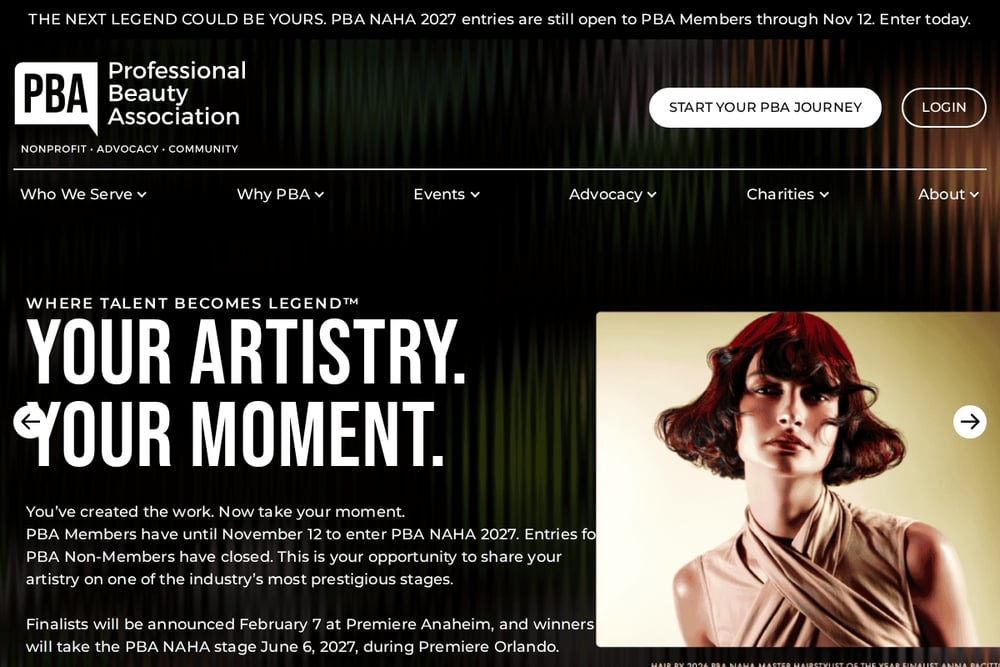 A screenshot of the Pro Beauty Association (PBA) website.
PBA operates on a national stage, and that scale shows. Membership tiers span licensed professionals, students, salons and spas, businesses, and visionary members, so there's a lane for nearly every role. The association runs major events, including the PBA Executive Summit and Premiere shows in Anaheim and Orlando. Its NAHA awards give artists a prestigious platform, with entries open to members and finalists announced at Premiere Anaheim. Advocacy is central too, with initiatives like the FICA Tax Tip Fairness campaign and the Texture Education Collective. PBA also offers scholarships and a Beacon Student Program for emerging talent. If you want national visibility, competitions, and industry-wide advocacy, PBA delivers that reach.
How to Choose the Right Association for You
Start with your license and your location. If you practice in Georgia, a state-focused organization like GCAPA gives you advocacy tuned to the Georgia State Board of Cosmetology and Barbers and the bills moving through the legislature. Next, match the association to your specialty. Estheticians who need insurance and regulatory detail will find ASCP's resources more relevant than a general trade group. Then consider your career stage. Students and new licensees benefit from mentorship, scholarships, and entry-level pricing. Salon owners and educators need tiered memberships that cover their whole team. Look at pricing structure too. A flat biennial fee like ACSP's is easy to budget, while tiered models like PBA's let you scale up as your business grows. Finally, think about what you actually want from membership: a local network, national stage time, or both. Many professionals hold two memberships to cover different needs.
Putting Your Membership to Work
Joining is step one. Step two is building a routine that extracts value every month. Set a recurring calendar reminder to check your association's events page and news feed, since updates on licensing rules and legislation move fast. Route renewal dates into your booking or accounting software so a lapsed membership never catches you off guard. If you're an educator or salon owner, use your association's directory listing to drive client and student discovery. Save continuing education deadlines alongside your license renewal date, and log completed CEU hours as you go. When advocacy alerts go out, respond. A short email to a legislator takes minutes and protects your license. Treat your membership like a business tool, not a badge, and it pays you back all year.
The Bottom Line
Georgia's beauty professionals have real options, and the right mix depends on your goals. GCAPA gives you a Georgia-specific voice with advocacy, education, and networking under one roof. ACSP keeps dues simple and affordable. ASCP delivers regulatory depth and insurance for skin care specialists. PBA opens national doors through competitions, events, and industry advocacy. You don't have to pick just one forever. Start with the association that solves your most pressing problem today, whether that's understanding a licensing change, finding liability coverage, or getting your work in front of a national audience. Then revisit your memberships each renewal cycle. Your career will change, and your associations should change with it.