
Hiring a game developer is a leap of faith. These four portfolios give you a real look at the work before you commit a dollar.
The Freelance Game Development Landscape
Freelance game development has never been more accessible, or more crowded. Solo developers now ship polished Unity titles, build multiplayer systems, and publish to itch.io and app stores without a studio behind them. For buyers, that means real options at real prices. It also means you need to separate hobbyists from people who can actually deliver on a deadline. Portfolios are the new resume. A demo reel, a playable build, or a live website tells you more in five minutes than a cover letter ever will. The developers below all lean on public work to prove their skills, and each takes a different path to doing it.
How We Evaluated These Portfolios
We looked at the same factors for every developer. First, service scope: can they handle games, web, apps, or all three? Second, proof of work: are there playable builds, demo reels, or live sites you can inspect? Third, technical depth: do they show advanced techniques like shaders, pathfinding, or multiplayer systems? Fourth, communication and hiring clarity: is it obvious how to reach them and what they offer? Maxkcy stands out for combining Unity game work with Nuxt and Vue.js web development in one place. KaitoMajima shines through game jam experience and a clean demo reel. Bilal Ahmad brings a broad commercial skill set spanning AR, machine learning, and app publishing. Petr Závodný offers unusually transparent project breakdowns with links to code and playable builds.
Here is a quick side-by-side of the four portfolios, from the featured developer to the specialists. Use it to shortlist before you dig into the details.
| Provider | Best For |
|---|---|
| KaitoMajima (Eduardo Alexander) | Buyers who want a design-aware Unity generalist with jam-tested delivery |
| Maxkcy's portfolio | Clients who want one developer for both Unity games and Nuxt websites |
| Bilal Ahmad | Businesses needing AR, app publishing, or enterprise-grade Unity work |
| Petr Závodný | Buyers who want to inspect code and playable builds before hiring |
The Four Portfolios in Detail
#1 KaitoMajima (Eduardo Alexander)
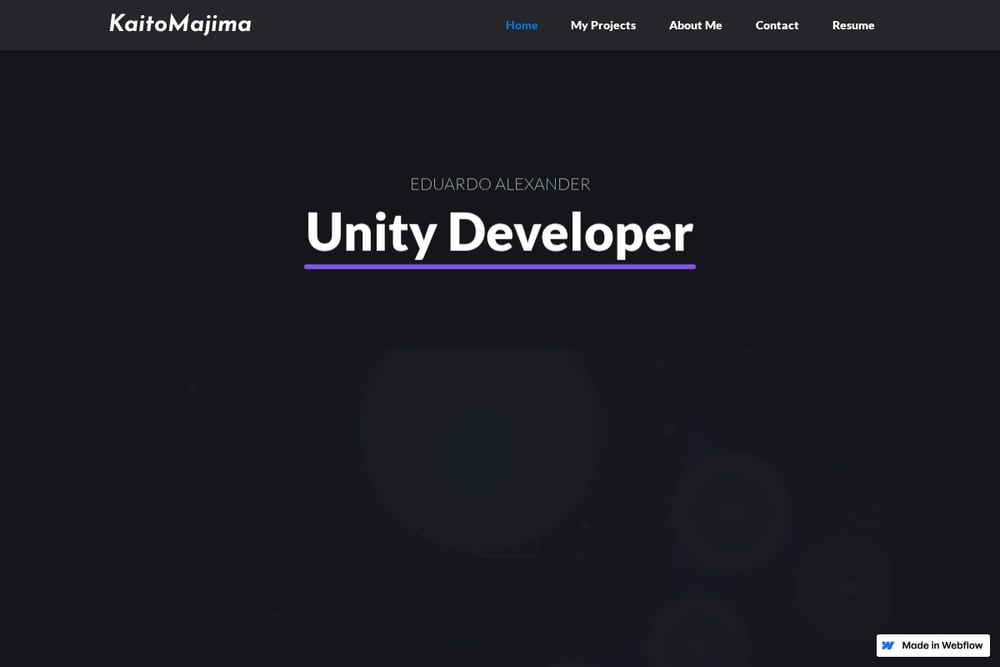 A screenshot of the KaitoMajima (Eduardo Alexander) website.
Eduardo Alexander, known online as KaitoMajima, is a Unity developer based in São Paulo with a sharp eye for presentation. His portfolio leads with a demo reel and a tidy grid of projects spanning rhythm games, 2D shooters, and 3D farming simulations. He is candid about being mostly self-taught and leans hard on game jams, having joined at least ten. That jam experience matters to you as a buyer because it shows he can scope, build, and finish under pressure. He also lists UX, UI, and vector design among his growing skills, which helps if you need a solo developer who can cover more than code. You can review his work and contact details directly on his portfolio site.
#2 Maxkcy's portfolio
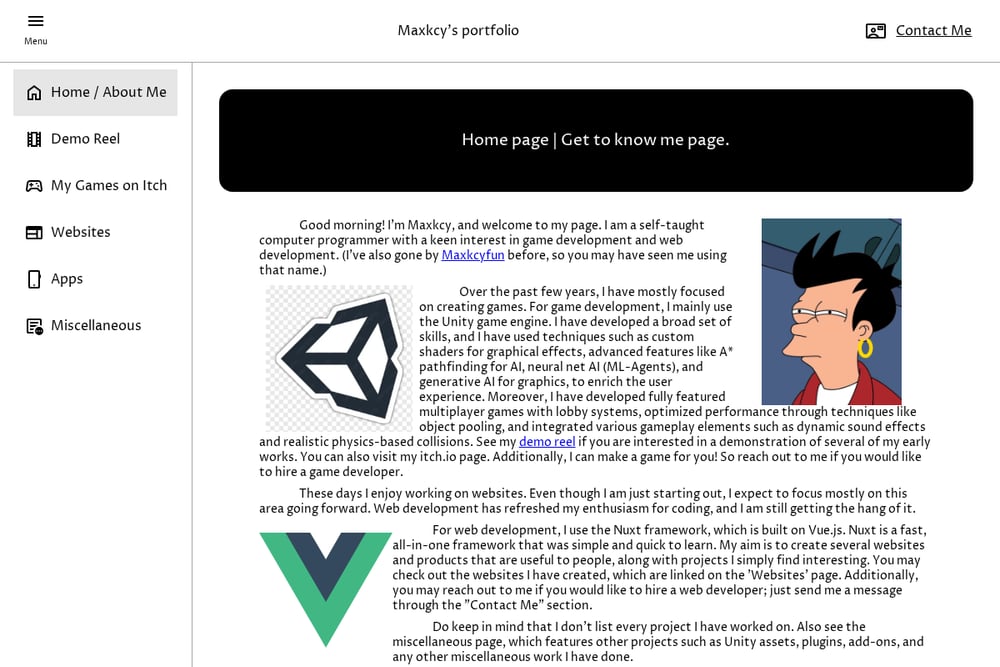 A screenshot of the Maxkcy's portfolio website.
Maxkcy is a self-taught programmer who splits his time between Unity games and Nuxt/Vue.js websites, and his portfolio makes both easy to browse. On the game side, he documents custom shaders, A* pathfinding, ML-Agents neural net AI, and generative AI for graphics. He also builds fully featured multiplayer games with lobby systems and optimizes performance through object pooling. That is a deeper technical resume than most solo portfolios show. On the web side, he is upfront that he is early in his journey but enthusiastic, and he invites you to hire him for either custom game or web development work. His demo reel and itch.io page give you playable proof before you reach out.
#3 Bilal Ahmad
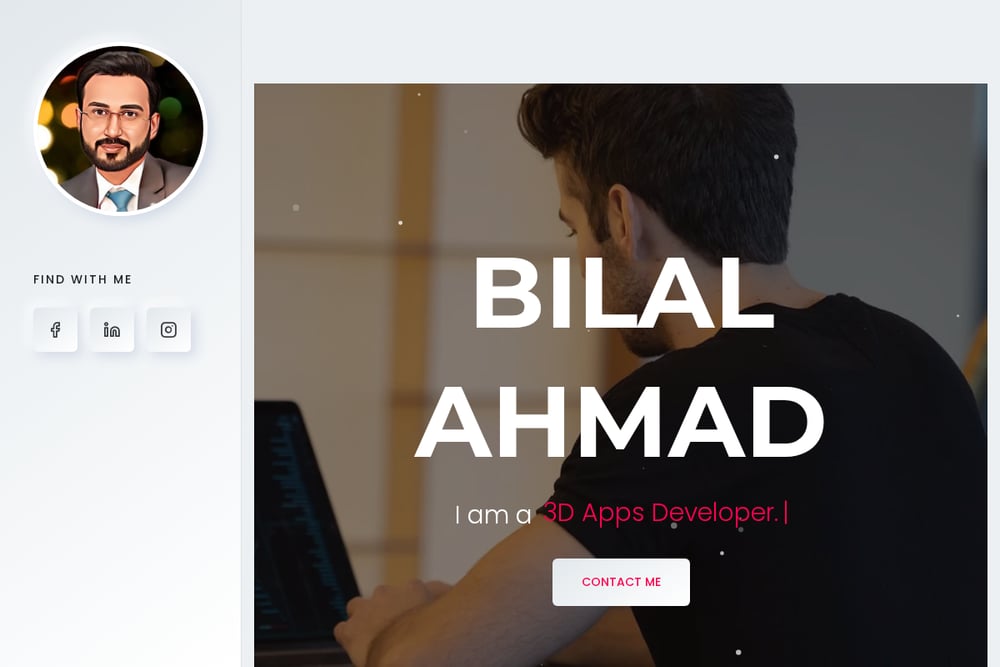 A screenshot of the Bilal Ahmad website.
Bilal Ahmad presents himself as a senior Unity developer with a commercial footprint that goes well beyond games. His portfolio covers 2D, 3D, and hypercasual game development, plus 3D apps, augmented reality, machine learning, digital twins, and metaverse work. He also handles iOS and Android app publishing, which is valuable if you need someone who can take a build all the way to the stores. The emphasis on communication and leadership experience suggests he is comfortable in client-facing engagements rather than solo hobby projects. If your project touches AR or enterprise applications, his range is worth a closer look. His site is the place to start the conversation.
#4 Petr Závodný
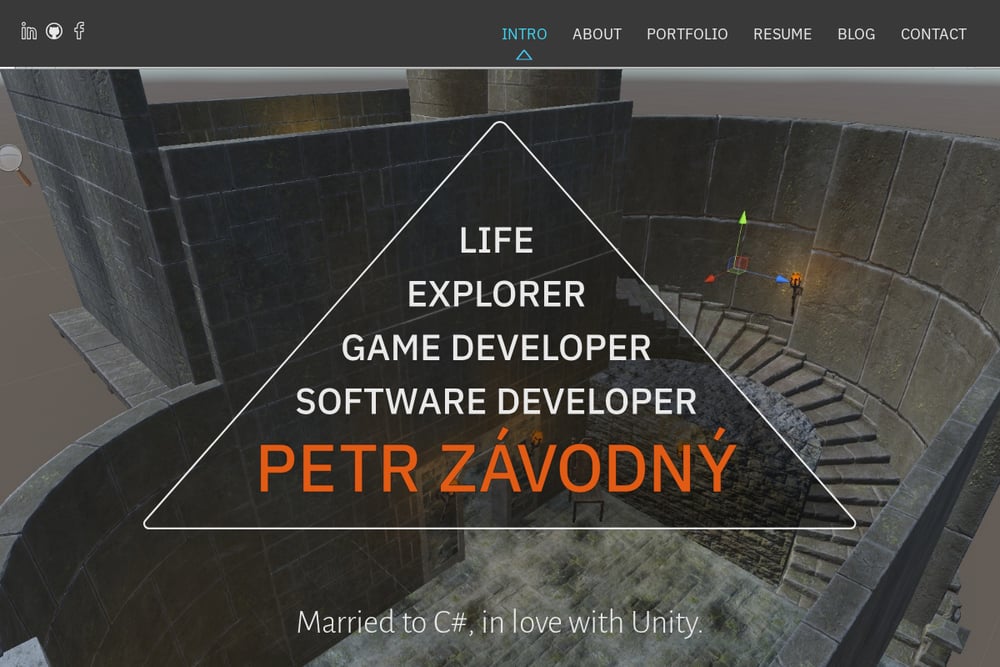 A screenshot of the Petr Závodný website.
Petr Závodný runs one of the more transparent developer portfolios you will find. Each game entry lists the technology stack, from Unity 3D and Blender to MagicaVoxel and Affinity Designer, along with a plain description of what the project was and what he learned. Better still, he links to playable online builds and public code on GitHub for projects like Color Craft, Magic Forge, and Brick Breaker. That level of openness lets you judge his code quality before you ever send an email. He also lists Unity assets and software work, hinting at a broader toolkit than games alone. For a buyer who wants to inspect the craft, this portfolio is refreshingly direct.
How to Choose the Right Developer
Start with the scope of your project. If you need a game and a marketing site, a dual-skilled developer like Maxkcy saves you from managing two contractors. If you need AR or store publishing, look at Bilal Ahmad's broader commercial range. Next, check the proof. Play the builds, watch the demo reels, and read the code where it is public. Petr Závodný makes that easy, and KaitoMajima's jam history tells you he finishes what he starts. Finally, test communication early. Send a short message describing your project and see how quickly and clearly each developer responds. The one who asks good questions is usually the one who will ship good work.
Where Automation Fits In
You do not need to automate the hiring decision, but you can streamline the shortlist. Set up a simple tracker with columns for service scope, proof of work, technical depth, and response time. Paste each portfolio link into the row and score them as you review. Use a shared doc to log your outreach messages so you can compare replies side by side. If you are evaluating multiple developers, a quick checklist beats scattered browser tabs every time. The goal is a clear, repeatable process that gets you to a confident hire without weeks of back-and-forth.
The Bottom Line
Each of these four developers brings something different to the table. KaitoMajima offers polished presentation and jam-tested delivery. Maxkcy combines Unity game development with Nuxt web work and documents serious technical depth. Bilal Ahmad covers commercial ground from AR to app store publishing. Petr Závodný gives you the rare chance to read the code before you hire. Match the portfolio to your project scope, verify the proof of work, and reach out with a clear brief. Do that, and you will find the right developer for the job.