
You want a reading program that actually moves the needle for a 3- to 7-year-old. These four options give you different paths to the same goal: confident, capable readers.
What are Education & Training services?
Early literacy is having a moment. Districts and families alike are looking for structured, Science of Reading-aligned instruction that fits into tight schedules and tight budgets. The market has responded with a mix of in-person tutoring, virtual 1:1 sessions, and scripted curricula that let non-teachers deliver high-quality lessons. The result is more choice than ever, but also more confusion about what works. The key is to match the delivery model to your child's needs and your available resources.
What we looked at when researching Education & Training
We looked at four factors across every program. First, service scope: does it cover ages 3 through early elementary, and does it address both decoding and comprehension? Second, delivery flexibility: can it work in a classroom, a living room, or online? Third, evidence and progress monitoring: are there studies or built-in assessments that show growth? Fourth, ease of use for the adult delivering the lesson. Once stood out for its 15-minute scripted model and district-level research. Hoot Reading impressed with certified teachers and Stanford-validated design. Institute of Reading Development offered a long-established weekly 1:1 structure with printed books. Ignite Reading delivered daily virtual tutoring with frequent progress checks.
| Provider | Best For |
|---|---|
| Hoot Reading | Families who want certified teachers online |
| Early Reading Program for Ages 3–7 | Once | Schools and parents who want a scripted, low-lift curriculum |
| Institute of Reading Development | Families who prefer a weekly 1:1 session with printed books |
| Ignite Reading | Districts that need daily virtual intervention at scale |
A closer look at 4 standout Education & Training
#1 Hoot Reading
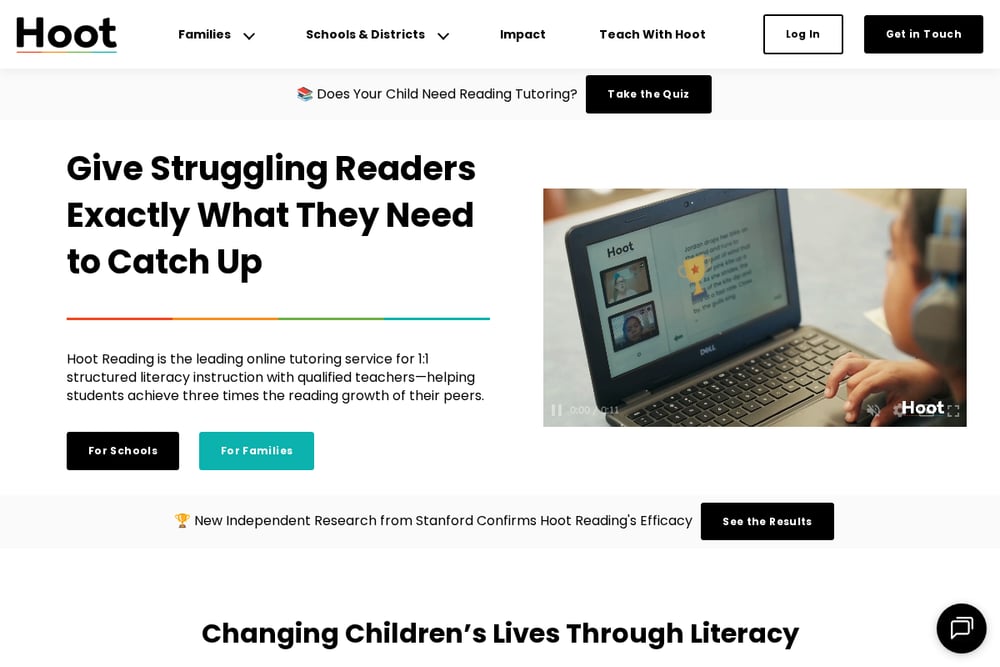 A screenshot of the Hoot Reading website.
Hoot Reading brings certified teachers directly to your screen for 1:1 structured literacy instruction. Every tutor holds a B.Ed or higher and has real classroom experience, so you are not getting a script-reader but a professional who can adapt. The program starts with the Hoot Reading Assessment, which pinpoints gaps in phonemic awareness, phonics, fluency, and comprehension. From there, lessons are personalized and progress is monitored every few weeks. Hoot also earned the Tutoring Program Design badge from Stanford's National Student Support Accelerator, and independent research shows students achieving three times the reading growth of their peers. You can explore the assessment and tutoring model at Hoot Reading.
#2 Early Reading Program for Ages 3–7 | Once
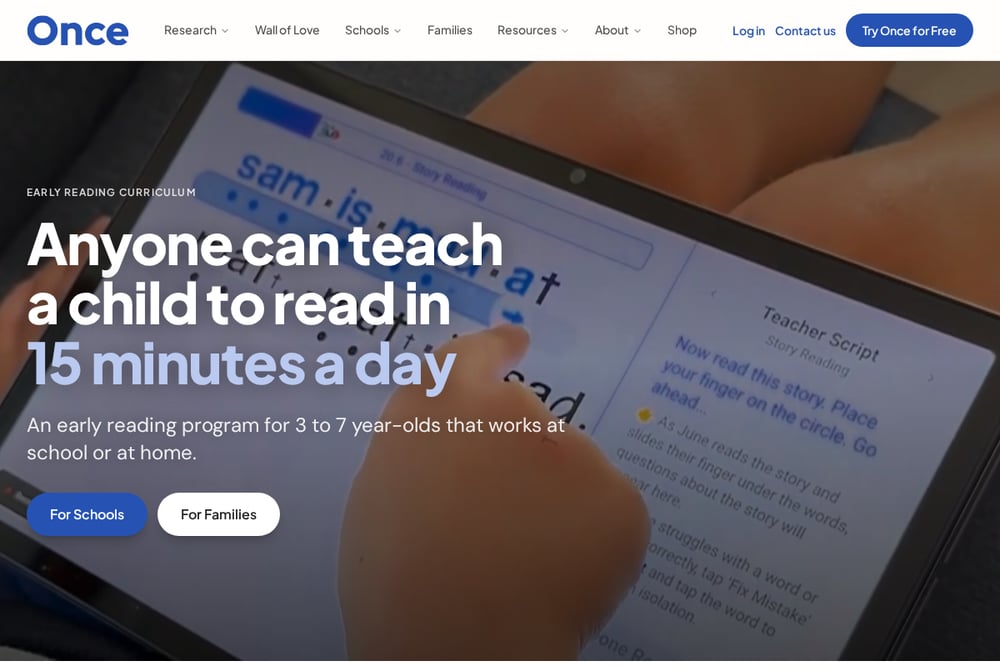 A screenshot of the Early Reading Program for Ages 3–7 | Once website.
Once flips the script on early reading by making anyone a capable instructor. Its 15-minute daily curriculum is fully scripted and paired with video coaching, so aides, assistants, and parents can deliver one-on-one tutoring without prior teaching experience. The program starts with letter sounds and progresses to chapter books at a mid-second-grade level, serving children from age 3 through 2nd grade, including English learners. Once is grounded in the Science of Reading and backed by district-wide studies. In one quasi-experimental study of 748 kindergarteners, students who completed 80 or more sessions showed a 0.46 standard-deviation effect and moved into a higher national quartile. A separate district study in Tangipahoa Parish saw median national percentile jump from 43rd to 61st. You can see the research and curriculum details at Once.
#3 Institute of Reading Development
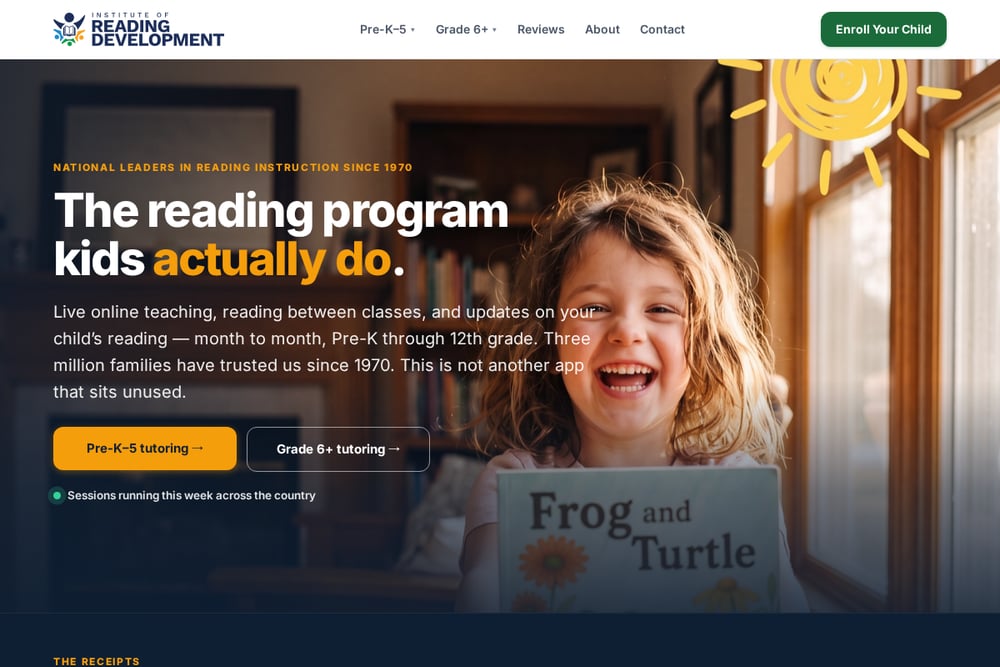 A screenshot of the Institute of Reading Development website.
The Institute of Reading Development has been running reading programs for decades, and its 1:1 tutoring option reflects that experience. You get one live 50-minute session per week with an expert teacher, one teacher and one child, plus optional printed books shipped to your home. Every session follows a structured curriculum, but teachers are trained to adapt to where your child is. An assessment happens in the first session, and skills are checked every six weeks. It is a steady, low-pressure rhythm that works well for families who want a weekly anchor without daily screen time. Learn more at Institute of Reading Development.
#4 Ignite Reading
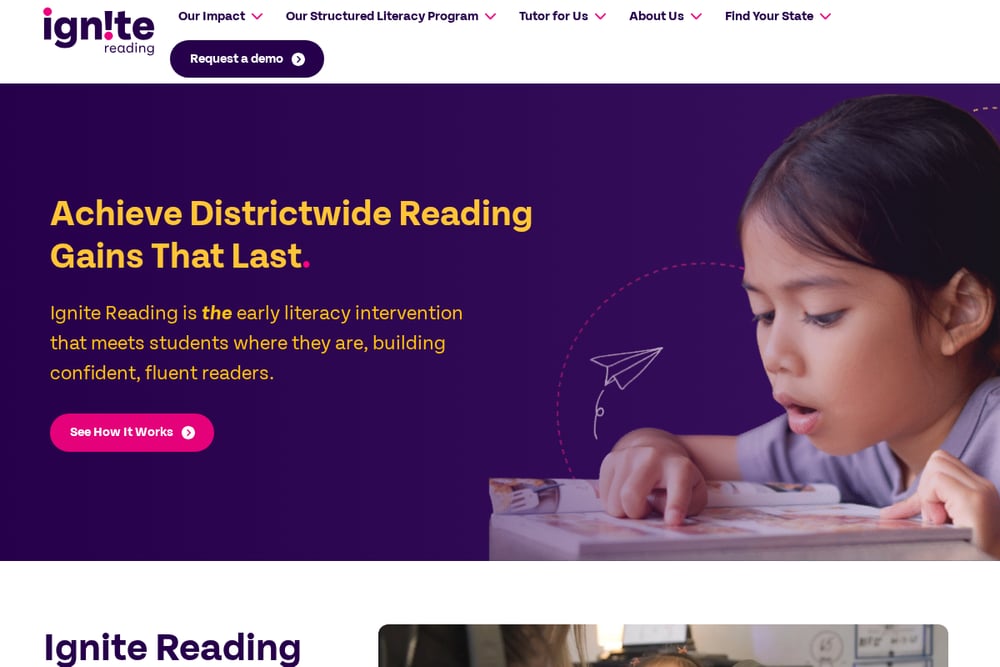 A screenshot of the Ignite Reading website.
Ignite Reading is built for schools that need to close foundational skill gaps fast. Its structured literacy intervention pairs each student with a virtual tutor for 15 minutes every day, one-to-one. Tutors use diagnostic baseline assessments to determine where each student starts, then progress monitor after every 14 lessons. The model includes regular data meetings with school and district leaders, so teachers get actionable information on each student's gaps. Once a student passes all foundational skills lessons, they graduate and another student can take the seat mid-year. It is a high-frequency, data-rich approach designed for district-scale implementation. See the program details at Ignite Reading.
How to choose the right Education & Training
Start with your delivery capacity. If you have a parent or aide who can sit with a child for 15 minutes a day, a scripted curriculum like Once gives you the most reach for the least training. If you want a certified teacher handling the lesson, Hoot Reading or Institute of Reading Development fit that bill, with Hoot offering more frequent progress monitoring and IRD offering a weekly rhythm with printed books. If you are a school leader trying to serve many students with daily intervention, Ignite Reading's virtual model and data meetings are built for that. Next, check the evidence. All four programs reference the Science of Reading, but look for specific studies or progress-monitoring schedules that match your population. Finally, consider the child's age and stage. Once and Hoot both start at pre-K and kindergarten, while IRD and Ignite focus on slightly older or school-based learners.
Expert Conclusion
There is no single right answer here, only the right fit for your child or your district. Once gives you a scalable, scripted path that anyone can deliver. Hoot Reading brings certified teachers to your screen with strong research backing. Institute of Reading Development offers a steady weekly 1:1 structure with printed books. Ignite Reading delivers daily virtual intervention with tight progress monitoring. Match the model to your resources, your schedule, and the child in front of you, and you will be well on your way to building a confident reader.