Your website is often the first handshake a customer gets, so who builds it matters more than most owners expect. These four studios each take a different path to getting you online, and one of them may fit exactly how you like to work.
The boutique web design landscape
Small business owners increasingly skip the big agency and hire a focused studio or solo developer instead. The appeal is simple: lower overhead, direct communication, and a single person who knows your project from first call to launch. Freelancers and boutiques now compete on speed and personal attention rather than headcount, and many pair design with light SEO and ongoing support. The tradeoff is capacity, since a solo operator can only juggle so many builds at once.
How these studios were compared
Each studio was weighed on service scope, how clearly pricing and process are explained, the depth of post-launch support, and how well the offering fits a small business budget. Communication style and the ability to talk directly to the person doing the work also counted heavily. No single factor decided the order, since a hands-on solo build and a broader multi-service shop suit very different owners.
Here is a quick look at how the four studios differ before you dig into the details.
| Provider | Best For |
|---|---|
| Matthew Woodard | Owners who want design plus SEO strategy |
| Home | Small businesses wanting a hands-on solo build |
| GraphicDOP | Owners wanting design plus marketing in one place |
| Local Creative | Creative businesses weighing their designer options |
The four studios in focus
#1 Matthew Woodard
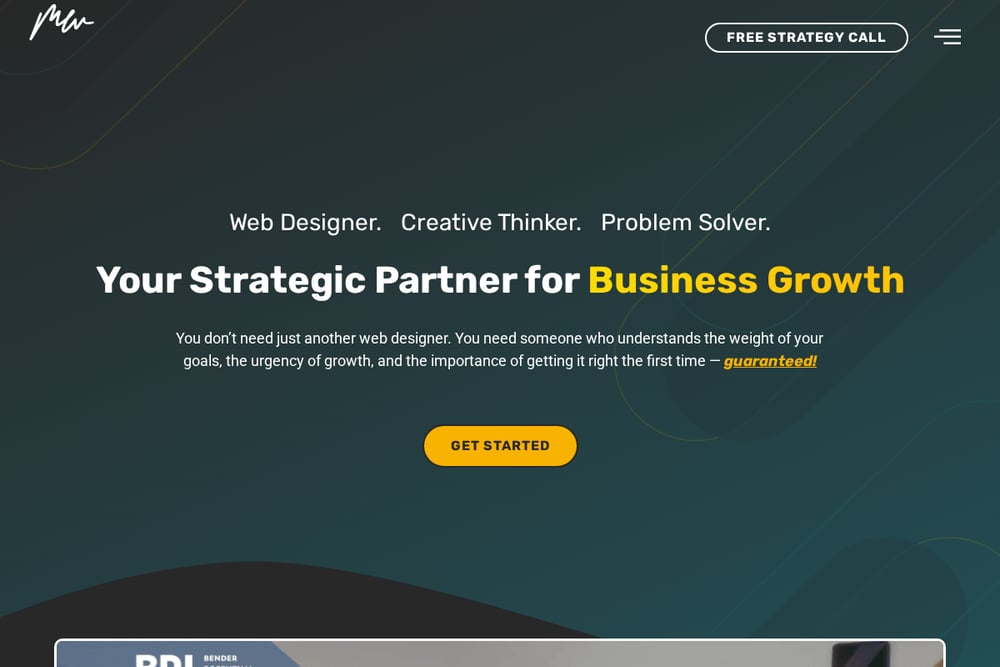 A screenshot of the Matthew Woodard website.
Matthew Woodard leads with two decades of design and development experience and a pitch built around results, not just looks. His site stresses that most websites appear fine but fail to perform, and he pairs clean design with SEO and structure meant to drive traffic. You get a free strategy call, a portfolio spanning healthcare, finance, and retail clients, and a transparent process with direct support. It is the most strategy-forward option here, aimed at owners who want growth baked into the build. The tradeoff is that the engagement leans larger and more involved than a simple brochure site.
#2 Home
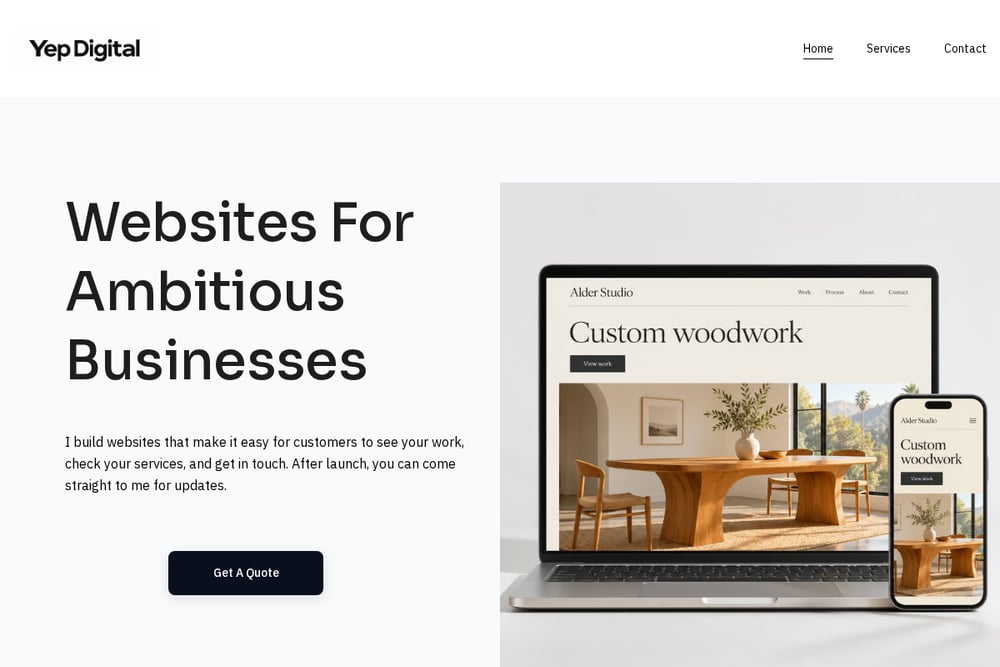 A screenshot of the Home website.
Home, operating as Yep Digital Web Studio, is a solo shop that builds custom sites for ambitious small businesses. The pitch is refreshingly plain: photos of your work, short service descriptions, readable text, and buttons that are easy to tap on a phone. Customers can call or send details through a short form, and you decide how you want to hear from them. The build runs in three steps, from a conversation about your business to a first draft you test on your own devices, then launch with links and forms checked. After go-live you come straight back to the same developer for updates, which is the real draw of a hands-on studio.
#3 GraphicDOP
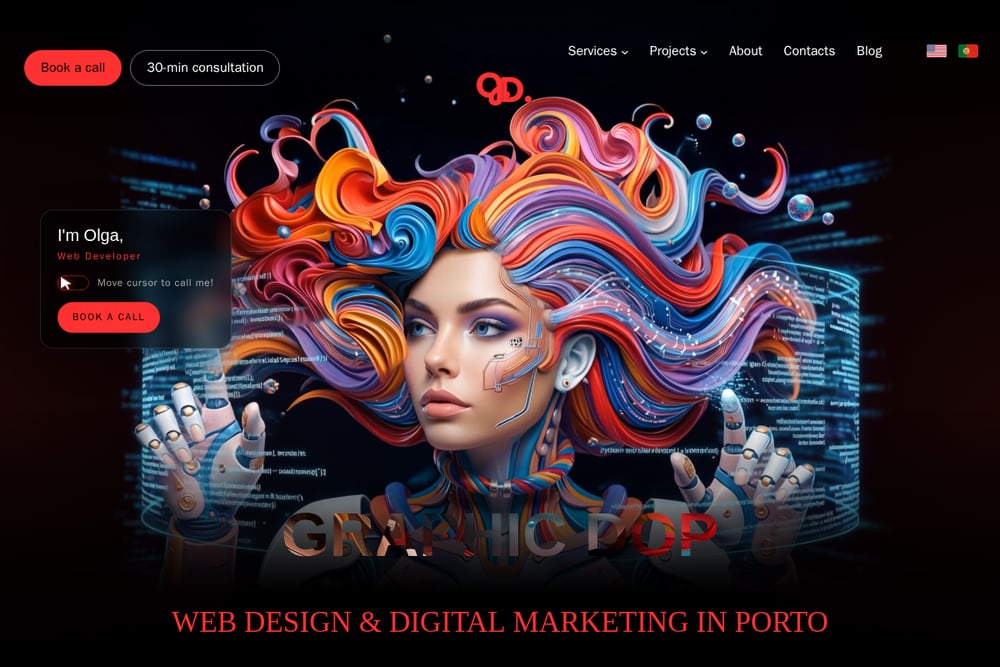 A screenshot of the GraphicDOP website.
GraphicDOP is a freelance designer and developer working across Europe, the UK, and Singapore, and the site doubles as an honest guide to hiring. Its comparison of freelancer versus agency lays out cost, communication, flexibility, and capacity side by side, which is genuinely useful before you commit. Services stretch beyond websites into WordPress and WooCommerce builds, SEO and Google Ads, logos and brand identity, and AI animation. That breadth makes it a fit for owners who want one contact across design and marketing. If you need a large team handling a complex platform all at once, though, an agency may still be the better call.
#4 Local Creative
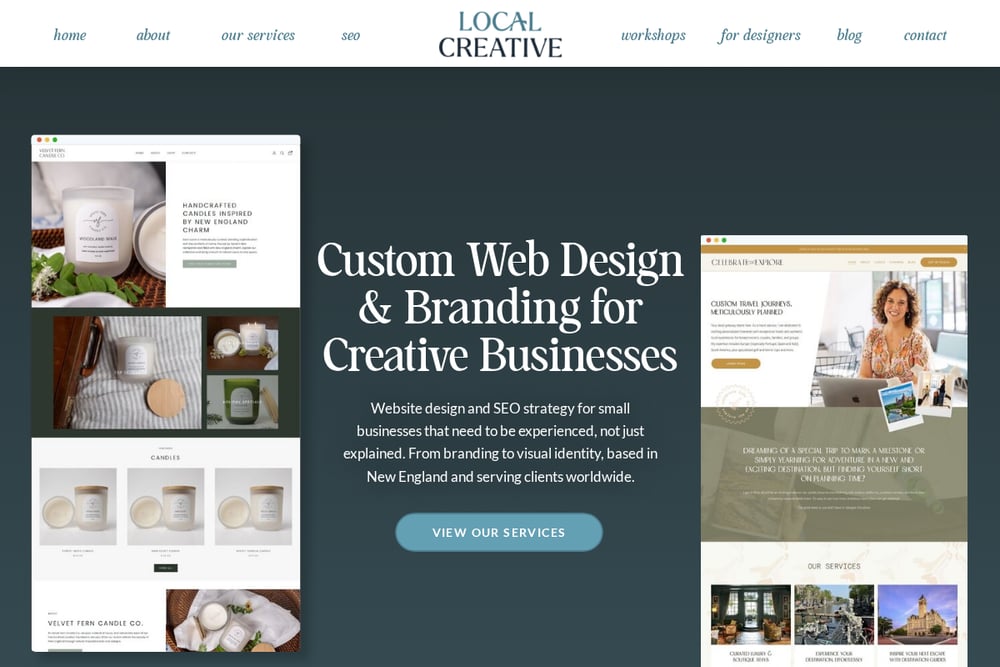 A screenshot of the Local Creative website.
Local Creative speaks directly to creative small businesses like photographers, boutiques, restaurants, and independent designers. The studio's guide breaks designers into three types, freelancer, agency, and boutique, and explains what to expect from each so you can match the option to your budget and personality. The founder's agency background informs a clear warning: polished but cookie-cutter sites often miss the audience entirely. The emphasis is on sites that feel authentic to the owner behind the business. It is a strong starting point if you are still deciding what kind of designer you actually need.
Choosing the right fit
Start with how much involvement you want. If you would rather talk to the person building your site and keep things simple, a solo studio like Home or GraphicDOP keeps overhead and back-and-forth low. If growth and search visibility are the priority, a strategy-led designer like Matthew Woodard earns the higher engagement. And if you are still unsure what type of designer fits, read a guide like Local Creative's before you spend a dollar. Ask every candidate who will handle updates after launch, how revisions work, and what a realistic timeline looks like for your scope.
Where automation fits in
You do not need a complex stack to get value here. A short contact form that routes inquiries to your inbox, an automated reply confirming you received the message, and a simple booking link for intro calls cover most of the follow-up. Pair that with a launch checklist that tests links and forms before go-live, and you remove the small errors that cost you leads. The studios above already build these basics in, so your job is to confirm they are wired up and tested before the site goes public.
The bottom line
There is no single right studio, only the right match for how you like to work. Home suits owners who want a direct, no-frills build with the same person on call after launch. Matthew Woodard fits those chasing growth and search traffic. GraphicDOP covers design and marketing under one roof, and Local Creative helps you decide what you need before you commit. Pick the one whose process matches your temperament, and the website will follow.