
Your company records might be worth more than you think. AI buyers are paying for the everyday trail of how work gets done, and these four services show you how to get a piece of it.
The Quiet Market for Your Operating History
AI labs have moved past scraped web text. They now want the chain of records that public pages never expose: the estimate that became a job, the ticket that became a resolution, the invoice that closed a deal. That shift has created a new intermediary market where owners of established businesses license a cleaned, de-identified copy of their operating records. You keep every original. The buyer gets defined use rights for a defined purpose. The money can be meaningful, but the rules are strict. Buyers want three or more years of digital history across multiple systems, mostly English records, and a headcount threshold that usually starts around 20 staff. Closed companies can qualify too, especially through programs built for businesses that have stopped trading. The catch is that this is still a young market with few vetted buyers, so the intermediary you choose matters as much as the records you hold.
How We Evaluated These Services
We looked at the same factors for every service. First, service scope: does the provider make introductions, advise you, or run a marketplace? Second, pricing clarity: is the fee structure explained plainly, and who pays whom? Third, qualification fit: do the published criteria match real business profiles, including closed companies and professional firms? Fourth, process friction: how many calls, forms, or access requests stand between you and a verdict? Data in Action stood out for its instant two-minute check, a free process, and a referral model paid only by the buyer. Main Street Wealth stood out for seller-side advisory depth and legal review. Nova Solutions stood out for a clear US operating-business focus and de-identification before anything leaves your business. Troveo stood out for marketplace scale and a long track record of payments to rights holders.
Here is the short version before the deep dive. Each service approaches the same opportunity from a different angle, so match the model to your situation rather than chasing the biggest name.
| Provider | Best For |
|---|---|
| Main Street Wealth | Owners who want seller-side advisory and legal review |
| Data in Action: get paid for your company records | Owners who want a free, no-call fit check before anything else |
| Nova Solutions | US operating businesses that want a packaged, de-identified submission |
| Troveo | Owners who want marketplace scale and licensing education |
The Four Services in Detail
#1 Main Street Wealth
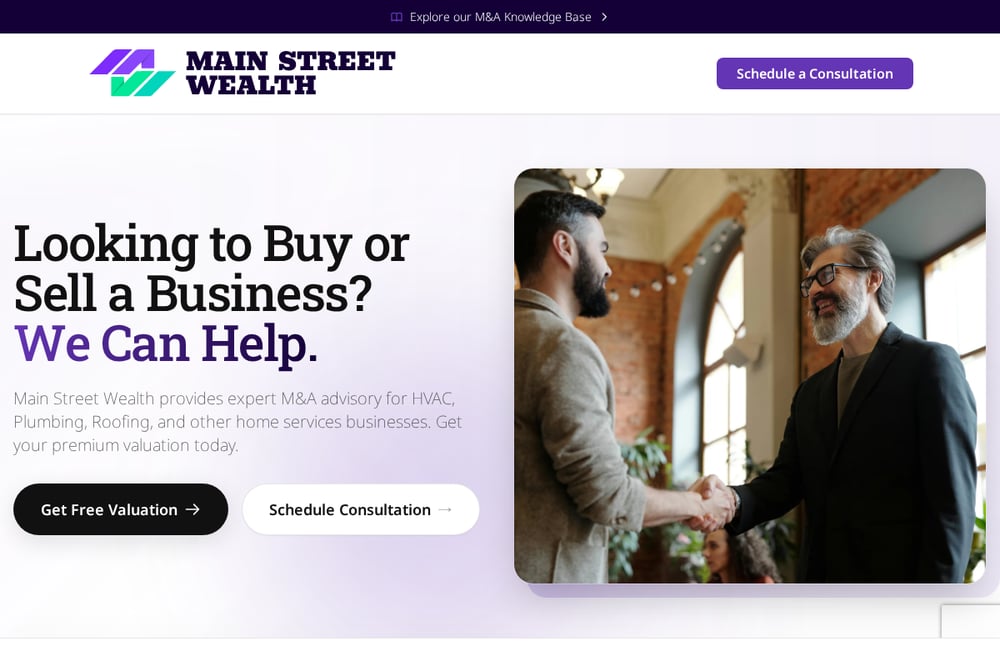 A screenshot of the Main Street Wealth website.
Main Street Wealth positions itself as a seller-side advisor, not a marketplace and not a buyer. That distinction matters because the firm says it represents you on the transaction and never takes a license of your data. The engagement is success-fee only, with no retainer and no monthly fee, and the firm says data moves from your own admin console to the buyer only after written approval. It also advertises legal review of the process and a track record in M&A advisory for home services. If you want an advisor in your corner rather than a self-serve form, this is the model to study. You can review the approach at Main Street Wealth's AI data brokerage page.
#2 Data in Action: get paid for your company records
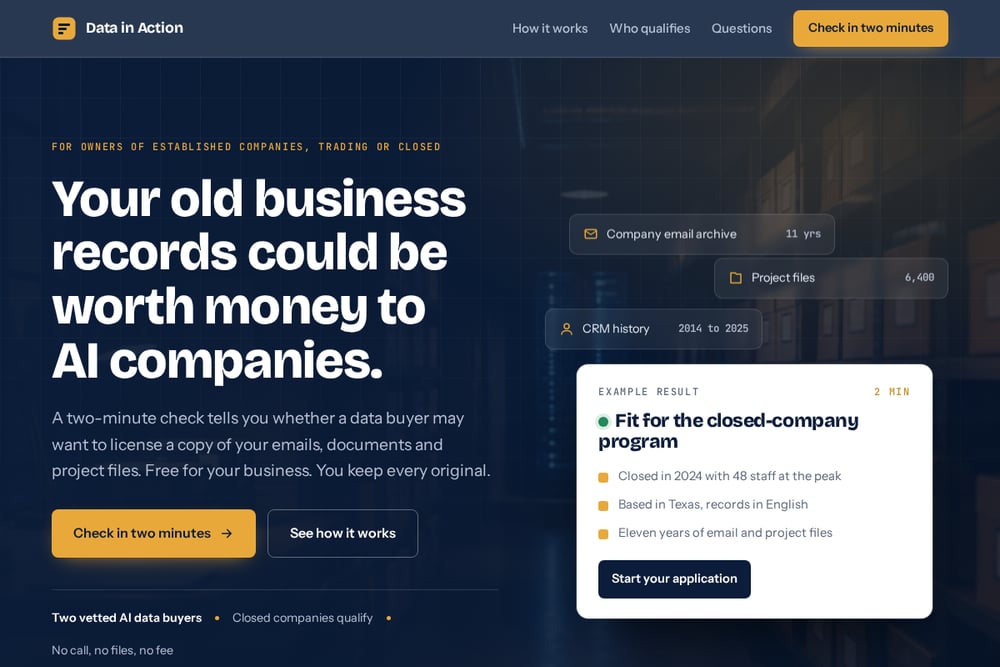 A screenshot of the Data in Action: get paid for your company records website.
Data in Action is an independent referral service based in British Columbia that connects owners of established companies, both trading and closed, with two vetted AI data buyers. The service is free to you at every stage, and the company is paid a referral fee by the buyer only when a deal is approved. The process starts with a two-minute check of seven questions that gives an instant verdict on the page and a copy by email, with no call or meeting required. If you fit, you apply to the right buyer through a referral link and deal with the buyer directly. Data in Action never asks for files, samples, system access, or payment, and your data never passes through the company. One buyer's published program page lists $100K to $2M+ compensation for an approved data package, though the buyer decides and nothing is promised. The founder is Josh Olayemi, and the qualification criteria are published and rechecked before each introduction.
#3 Nova Solutions
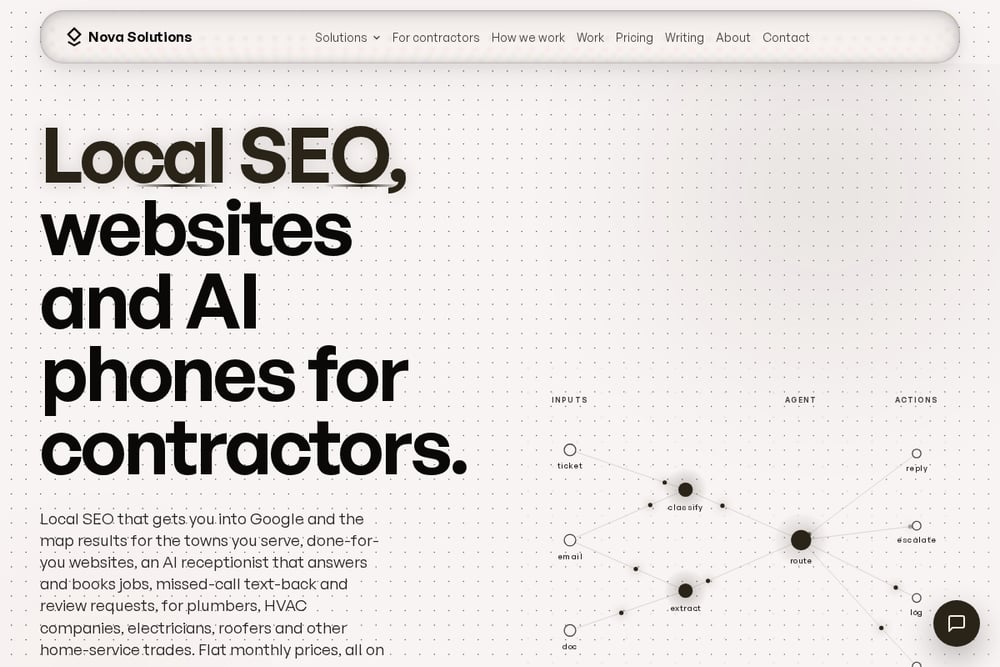 A screenshot of the Nova Solutions website.
Nova Solutions takes a packaging-and-introduction approach for US operating businesses with 20 or more employees and at least three years of records. The firm says it packages a de-identified copy of your records, takes it to AI labs and model developers, and brings back an offer. You approve the buyer and the price, and everything is de-identified before it leaves your business. Nova says it is paid only if you accept an offer, and it names sectors including manufacturing, freight and logistics, 3PL, accounting, finance, insurance, distribution, construction, professional services, and retail. Healthcare and legal are listed as not eligible yet pending compliance review. The firm also cites two independently arranged deals that closed at $100,000 each in three and five business days. You can read the details on Nova Solutions' data licensing page.
#4 Troveo
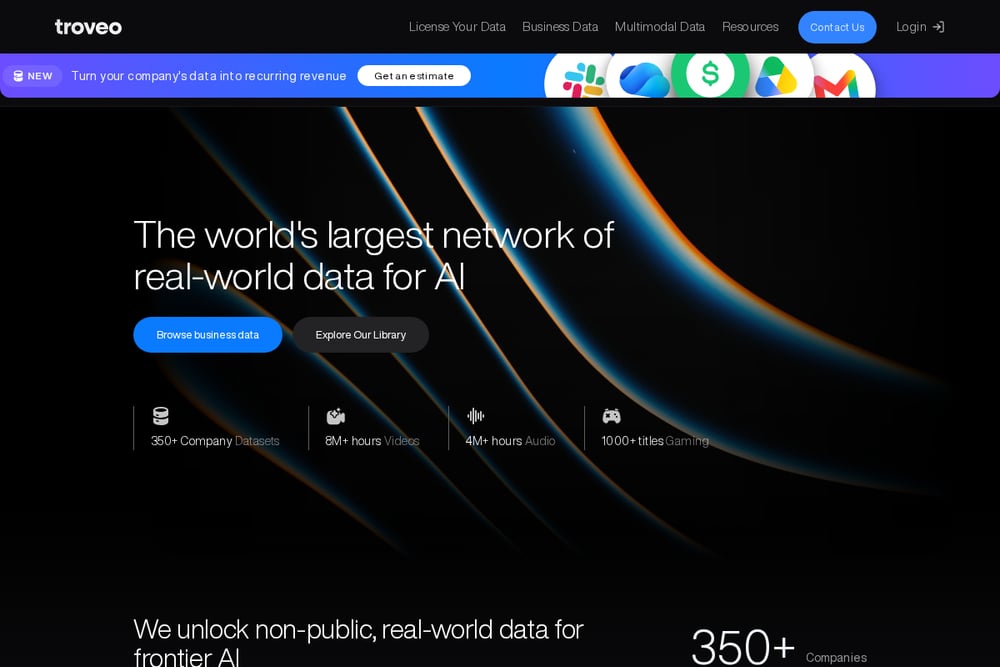 A screenshot of the Troveo website.
Troveo runs the marketplace version of AI data licensing and says it has paid more than $20 million to over 7,000 rights holders across video, audio, gaming, robotics, and business data. That scale gives you a sense of how the licensing agreement itself works, including the five questions every real training license should answer: use, scope, term and exclusivity, and who carries the risk. Troveo's resource library explains how deals are priced and what data costs, which is useful homework before you talk to any buyer. The marketplace model is broader than operating records alone, so it suits owners who want to understand the wider rights-holder market. Start with Troveo's AI data licensing guide.
How to Pick the Right Path for Your Records
Start with your situation, not the brand. If your company is closed or you want a fast, free verdict with no call, a referral check is the lowest-friction entry point. If you are still trading and want someone in your corner negotiating and reviewing the license, a seller-side advisor model fits better. If you have a US operating business above the headcount threshold and want the packaging handled for you, a de-identification-first service is worth a look. If you are still learning how these deals are structured, spend an hour with marketplace education before you sign anything. In every case, confirm three things in writing: who pays the intermediary, what happens to your originals, and who approves the buyer and the price. Never hand over files, samples, or system access before you have a written agreement.
Where Automation Fits in the Process
You do not need a complex stack to explore this market. Use a simple workflow. First, run a free fit check and save the emailed verdict in a dedicated folder. Second, inventory your systems, meaning email, CRM, ticketing, accounting, and operations software, and note how many years of digital history each holds. Third, draft a one-page data summary that lists systems, record types, headcount, and years covered, and keep it ready for buyer conversations. Fourth, set a calendar reminder to recheck qualification criteria before each introduction, since buyers update thresholds. Fifth, route every buyer communication through one inbox so approvals and offers stay in one thread. That is enough to move quickly without exposing anything you should not.
The Bottom Line
Your operating records are an asset, but only if you treat the process with the same care you would give any deal. The four services here cover the main models: referral checks, seller-side advisory, packaged submissions, and marketplace licensing. Data in Action is the easiest first step because the check is free, fast, and requires no call, and it handles both trading and closed companies. Main Street Wealth suits owners who want an advisor and legal review. Nova Solutions fits US operating businesses that want de-identification handled before anything moves. Troveo gives you the marketplace view and the licensing education to ask better questions. Pick the model that matches your situation, confirm the terms in writing, and keep every original where it belongs.