
If you're building a robot that needs to see, you need a 3D stereo vision camera that can handle real-world conditions. Here are five manufacturers that are shaping the future of machine perception.
The 3D Vision Landscape in 2026
The 3D vision market has exploded beyond factory floors. Today, you'll find depth-sensing cameras in logistics robots, medical devices, retail analytics, and even fitness tracking. The core technology—stereo vision, structured light, and time-of-flight—has matured to the point where off-the-shelf cameras can deliver millimeter-accurate depth at 30 frames per second. But not all cameras are created equal. Some excel in indoor lighting, others in bright sunlight, and some are built to withstand the vibration of a robotic arm. As you evaluate options, you'll need to consider resolution, range, frame rate, and the software ecosystem that supports your development. The good news? You have more choices than ever, from established industrial giants to nimble innovators.
How We Evaluated These 3D Vision Providers
We looked at each company's product breadth, developer experience, and industry focus. We considered how well their cameras handle different lighting conditions, their SDK quality, and the availability of documentation and community support. We also factored in their track record in robotics and automation, and how easily you can integrate their hardware into your existing stack. Each provider brings a different strength to the table, and our goal is to help you find the right fit for your specific application.
Here's a quick snapshot of the five companies we're highlighting, with their key strengths and what they're best for.
| Provider | Best For |
|---|---|
| Teledyne Vision Solutions | Industrial-grade performance and extensive camera selection |
| Home - ORBBEC - Leading Provider of Robotics and AI Vision | Full-stack 3D vision solutions for robotics and AI developers |
| Zivid | High-fidelity point clouds for complex industrial tasks |
| Basler | Reliable, well-supported cameras for a variety of industries |
| Balluff | Seamless integration with existing industrial sensor ecosystems |
The Deep Dive: 5 3D Stereo Vision Camera Manufacturers
#1 Teledyne Vision Solutions
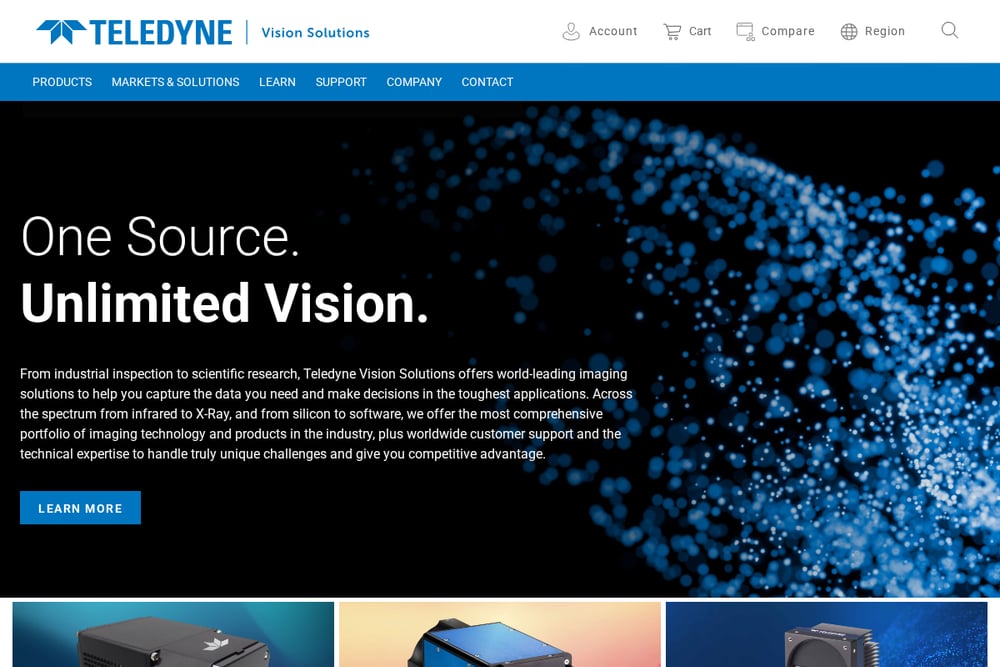 A screenshot of the Teledyne Vision Solutions website.
Teledyne Vision Solutions is a powerhouse in the machine vision industry, offering a vast portfolio that includes stereo cameras, 3D imaging, and a wide range of industrial cameras. Their strength lies in their ability to serve high-end industrial applications, from factory automation to scientific research. If you need a camera that can handle harsh environments and deliver consistent performance, Teledyne's lineup is worth a serious look. They also provide a comprehensive camera selector tool that helps you dial in the exact specs you need, which is a huge time-saver. Their global support network and long-standing reputation make them a reliable choice for mission-critical deployments.
#2 Home - ORBBEC - Leading Provider of Robotics and AI Vision
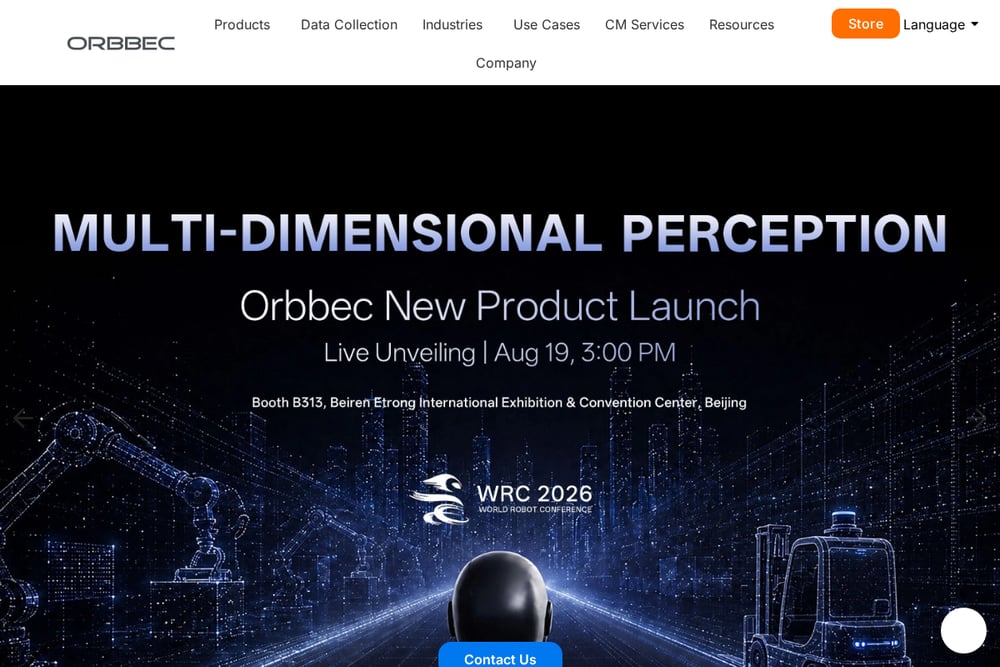 A screenshot of the ORBBEC website.
Orbbec is a full-stack 3D vision company that designs and manufactures a wide range of depth cameras, including stereo vision, TOF, and structured light models. Their Gemini series, for example, offers high-resolution depth sensing with a compact form factor, making it ideal for robotics and AI applications. What sets Orbbec apart is their commitment to developer experience—they provide SDKs, documentation, and a community forum to help you get up and running quickly. They also offer camera computers and LiDAR, so you can build a complete perception system from a single vendor. Whether you're working on a robotic arm, a logistics robot, or a healthtech device, Orbbec has a camera that fits your needs.
#3 Zivid
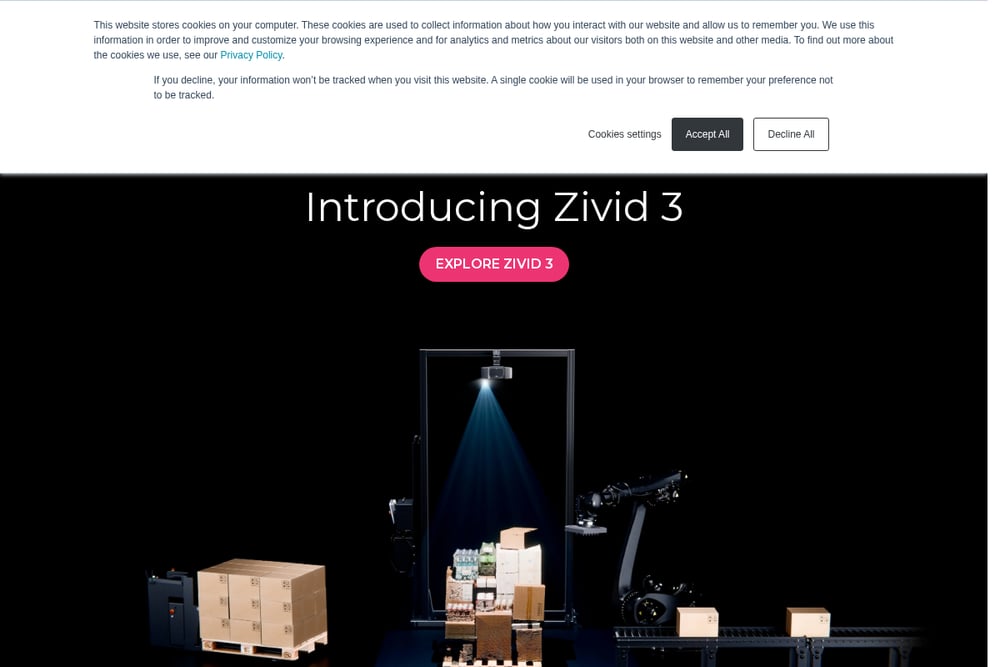 A screenshot of the Zivid website.
Zivid specializes in high-quality 3D stereo vision cameras that produce true-to-reality point clouds. Their cameras are designed for industrial applications like bin picking, depalletization, and inspection, where accuracy and color fidelity are critical. Zivid's SDK is known for being intuitive, and they offer a range of accessories to help you integrate their cameras into your robotic cell. If you're dealing with shiny or dark objects that trip up other sensors, Zivid's technology is engineered to handle those challenging surfaces. They also provide a wealth of learning resources, including webinars and case studies, to help you get the most out of their hardware.
#4 Basler
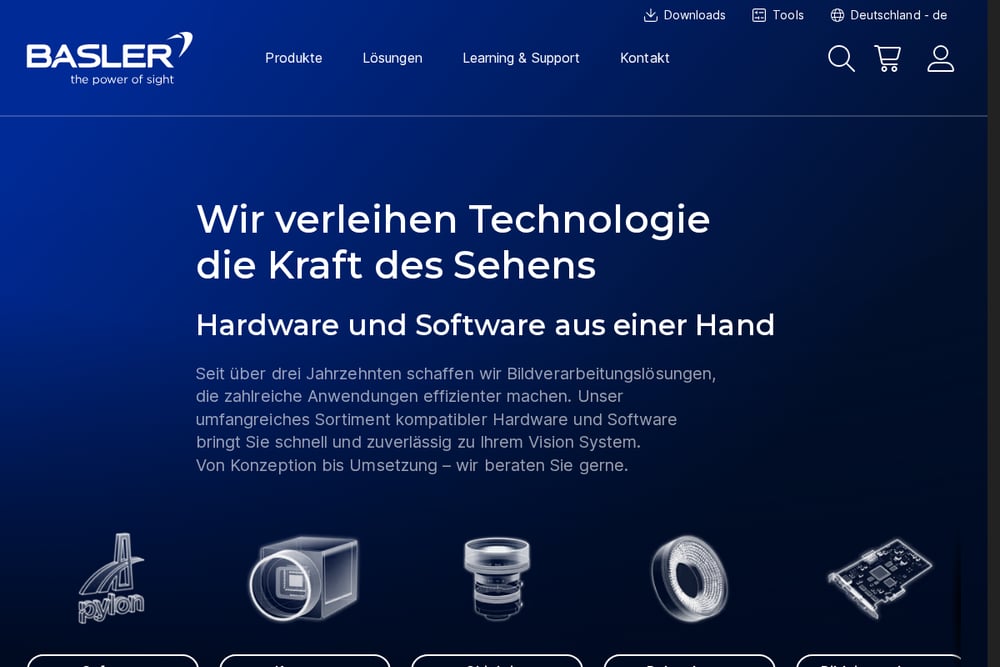 A screenshot of the Basler website.
Basler is a well-known name in the machine vision world, offering a broad range of cameras, including stereo and time-of-flight models. Their Basler Stereo Camera is designed for easy integration, and they provide a comprehensive suite of software tools to support your development. Basler's strength lies in their reliability and their ability to serve a wide range of industries, from manufacturing to medical technology. They also offer a variety of lenses and accessories, so you can build a complete vision system from one supplier. If you're looking for a camera that's backed by decades of experience and a global support network, Basler is a solid choice.
#5 Balluff
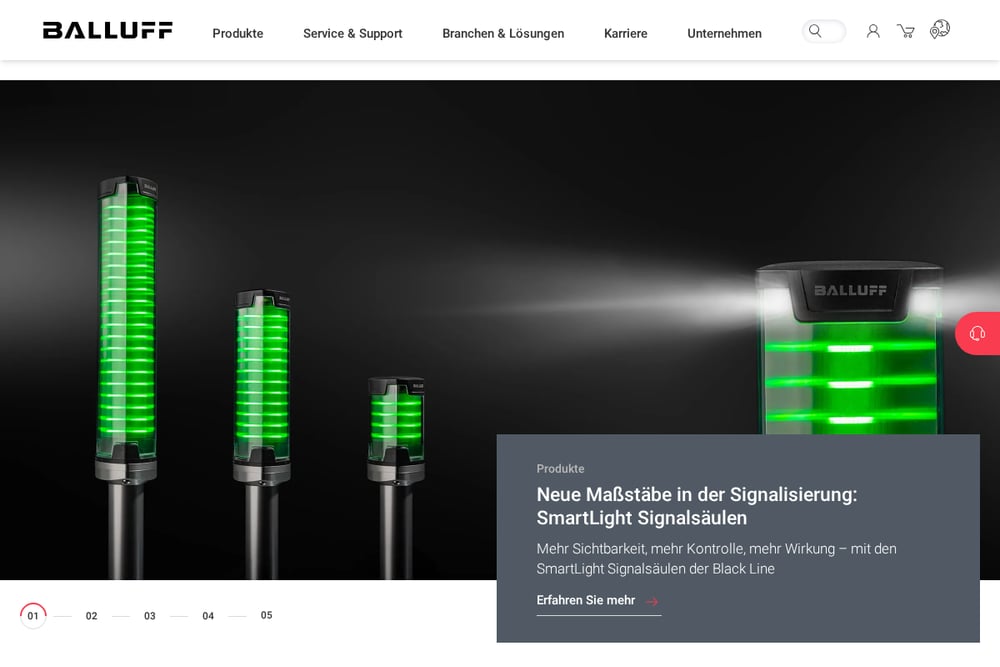 A screenshot of the Balluff website.
Balluff is a sensor specialist that has expanded into 3D stereo vision with a focus on industrial automation. Their 3D stereo camera is designed for applications like quality inspection and robot guidance, and it integrates seamlessly with their broader sensor portfolio. Balluff's strength is their deep understanding of factory floor challenges, and they offer robust support for system integrators. If you're already using Balluff sensors in your facility, adding their 3D camera can simplify your supply chain. They also provide demo software so you can test their camera's capabilities before making a commitment.
How to Choose the Right 3D Stereo Vision Camera
Start by defining your application's requirements: what's the working distance, the required accuracy, and the lighting conditions? If you're building a robot that needs to navigate dynamic environments, you'll want a camera with a high frame rate and robust depth filtering. For industrial inspection, you might prioritize color fidelity and the ability to handle reflective surfaces. Also, think about your development team's expertise—a camera with a well-documented SDK and active community can save you weeks of work. Finally, consider the total cost of ownership, including lenses, cables, and software licenses. Don't just look at the camera price; factor in the time it takes to get your system up and running.
Automating Your 3D Vision Workflow
Once you've selected your camera, you'll want to integrate it into your automation pipeline. Most of these cameras come with SDKs that support popular programming languages like C++ and Python, and they can output point clouds or depth maps that feed directly into your vision algorithms. You can use these cameras to automate tasks like bin picking, where the camera identifies the position and orientation of objects for a robot to grasp. For logistics, you can use them to measure parcel dimensions and optimize loading. The key is to start with a simple proof of concept, then scale up as you refine your algorithms.
The Bottom Line on 3D Stereo Vision Cameras
The 3D stereo vision market is packed with capable players, and the right choice depends on your specific needs. Teledyne offers industrial might, Orbbec provides a developer-friendly full-stack approach, Zivid excels at high-fidelity imaging, Basler brings reliability, and Balluff integrates seamlessly with existing sensor networks. Take the time to evaluate your application's demands, and don't be afraid to request demo units or trial software. The future of robotics and automation is being built on these cameras, and with the right partner, you'll be ahead of the curve.